


Conference Scenarios:

Industry Challenges:

Functional Requirements:
• What requirements must be met for the simultaneous interpretation system when setting up an international conference room?
System Overview:
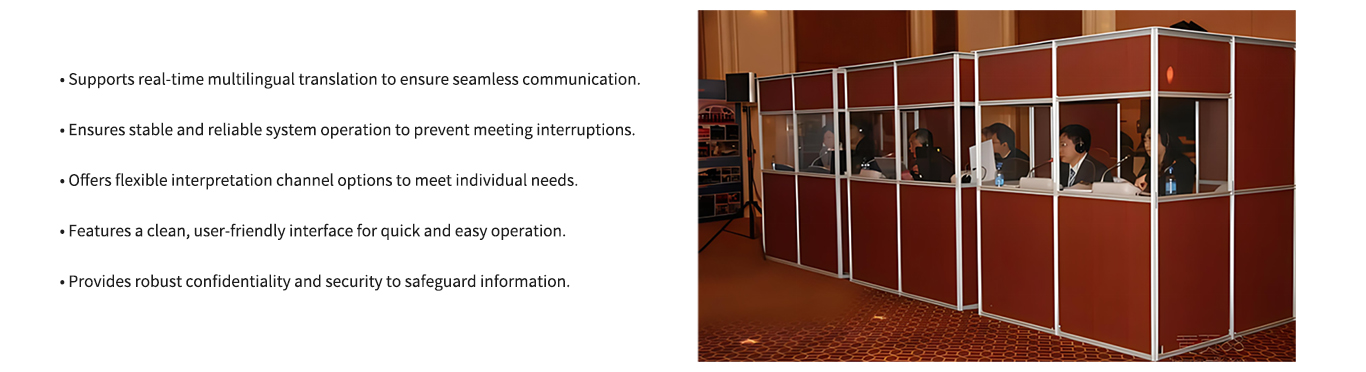
• Simultaneous interpretation, commonly abbreviated as “simultaneous,” also known as “simultaneous translation” or “synchronous interpretation,” is a form of interpretation in which the interpreter continuously conveys the speaker’s words to the audience without interrupting the speaker. Simultaneous interpreters use specialized equipment to provide real-time translation. This method is suitable for large-scale seminars and international conferences and is typically performed by two to three interpreters working in rotation.
System Value:

Wireless Simultaneous Interpretation Architecture Diagram:
Wired Simultaneous Interpretation Architecture Diagram:
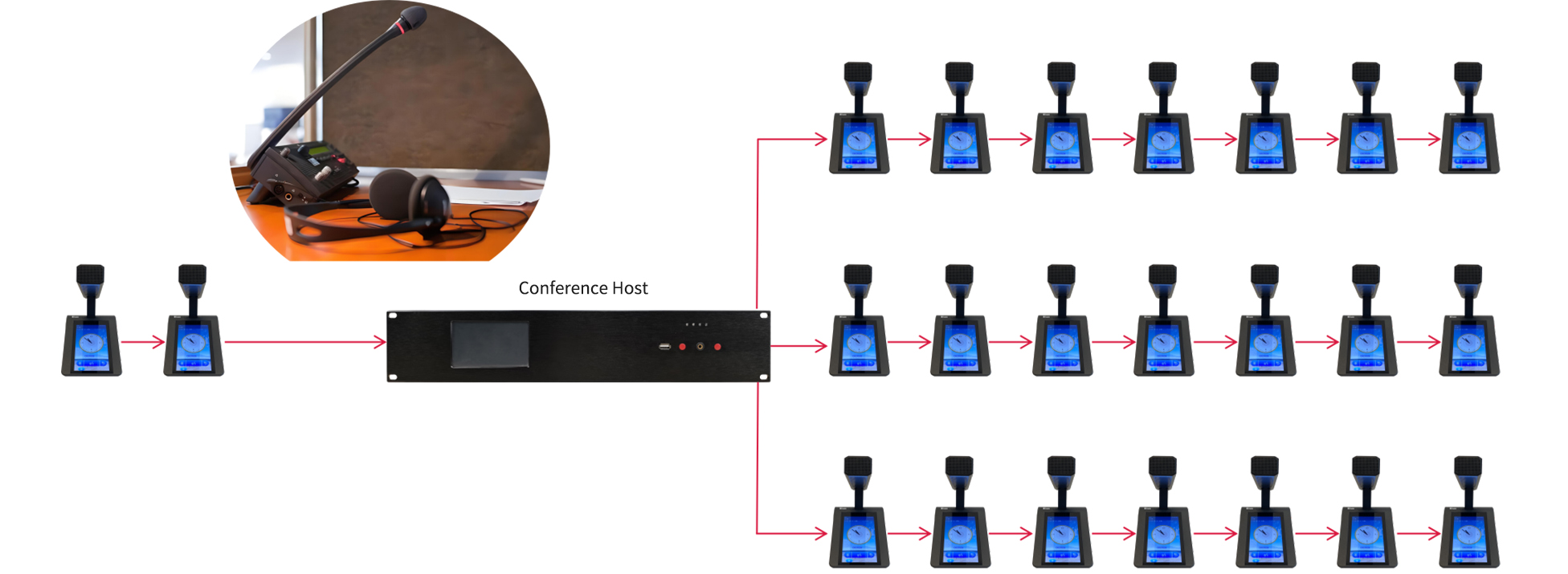
System Features:
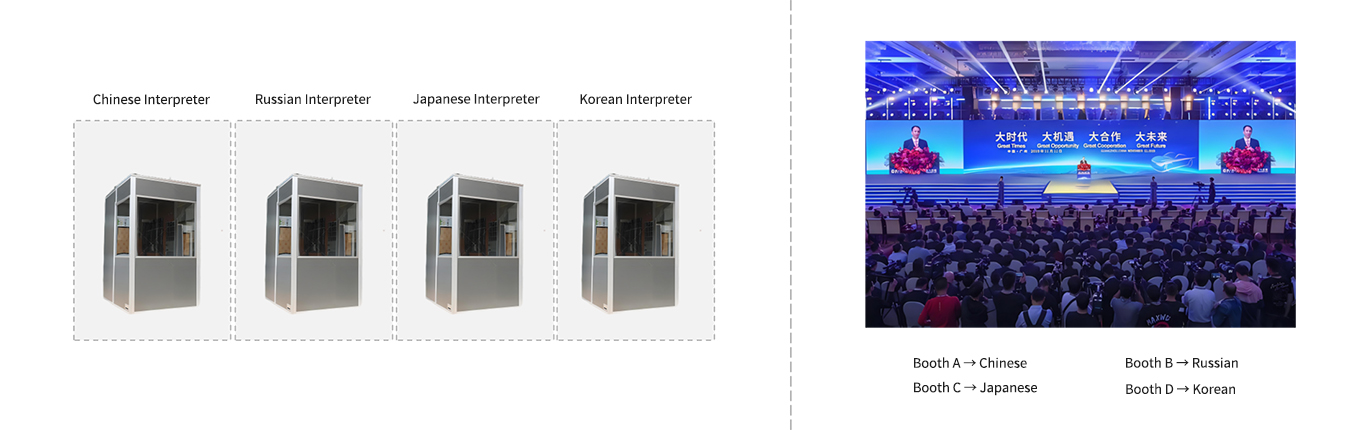
Simultaneous Interpretation Feature:
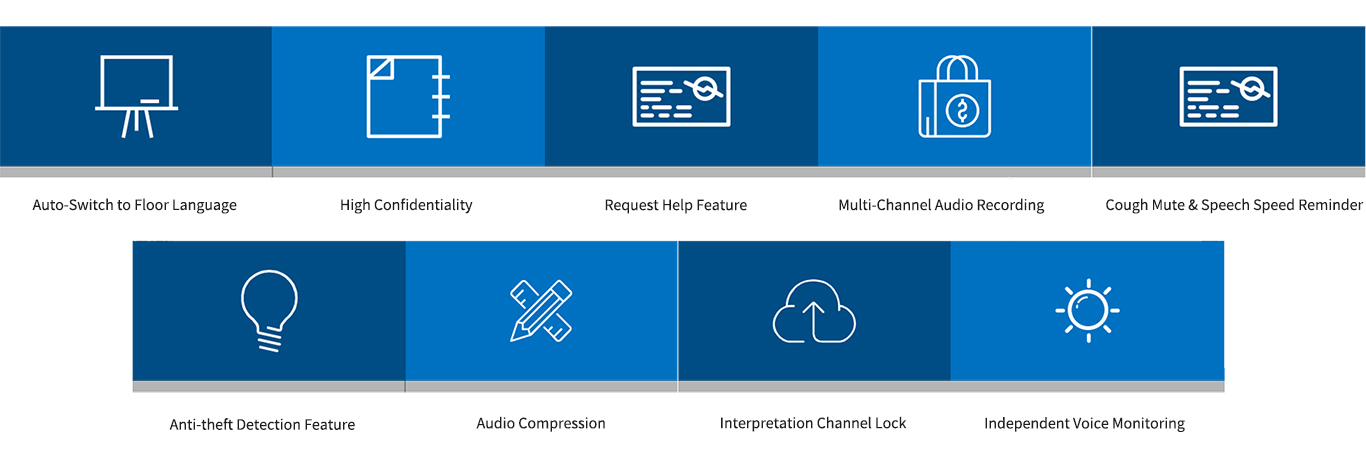
Automatic Switching to the On-Site Language Feature:
• When the speaker on-site is using the same language as the interpreter, the interpreter for that language no longer needs to interpret and may turn off the microphone on their interpreter unit to take a brief break. At this time, the interpretation control unit should automatically switch the channel occupied by that interpreter to the on-site language.
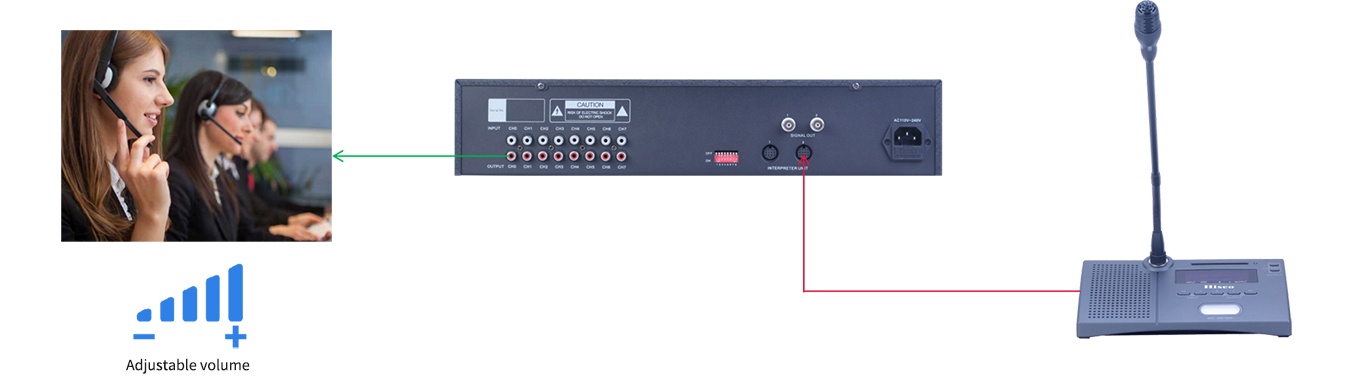
Independent Audio Monitoring Function:
• The interpretation control unit can monitor each channel and the on-site languages, and features independent volume control.
Interpretation Channel Lock Function:
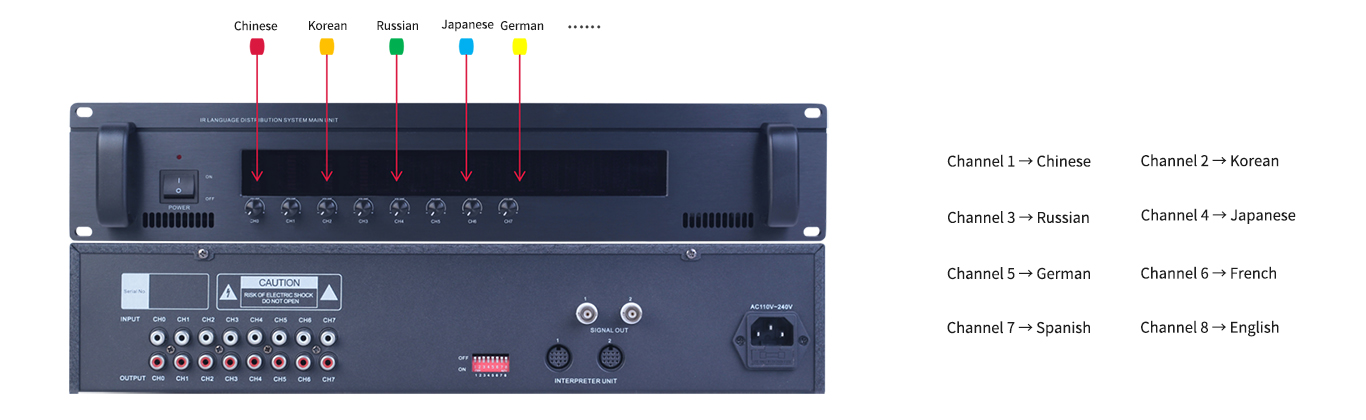
• To prevent different languages from occupying the same channel, the system should include a channel occupancy indicator.
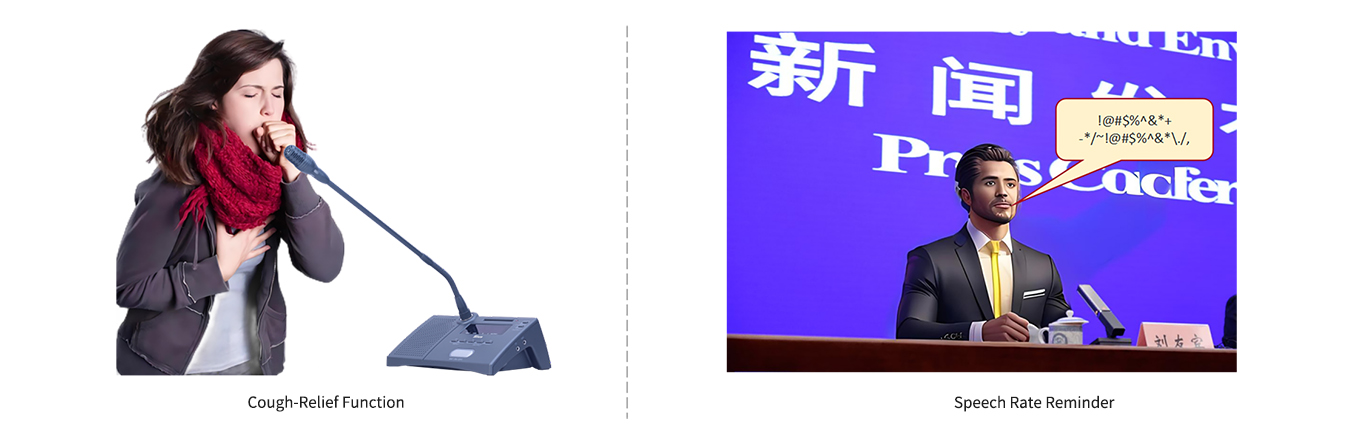
Cough Mute and Speaking Pace Reminder:
• Features a cough mute function that mutes the microphone when an interpreter coughs, preventing the sound from being transmitted to the conference room
• Includes a speaking pace reminder function; when an interpreter presses a button, a prompt is issued asking the speaker to slow down
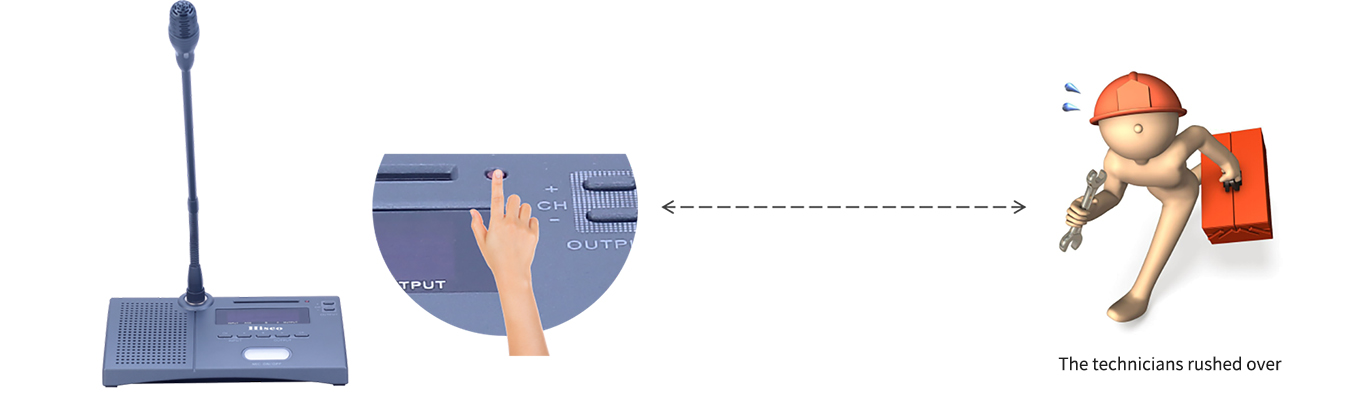
Request for Assistance:
• Features a “Request for Assistance” function; interpreters can press a button to call an operator for help
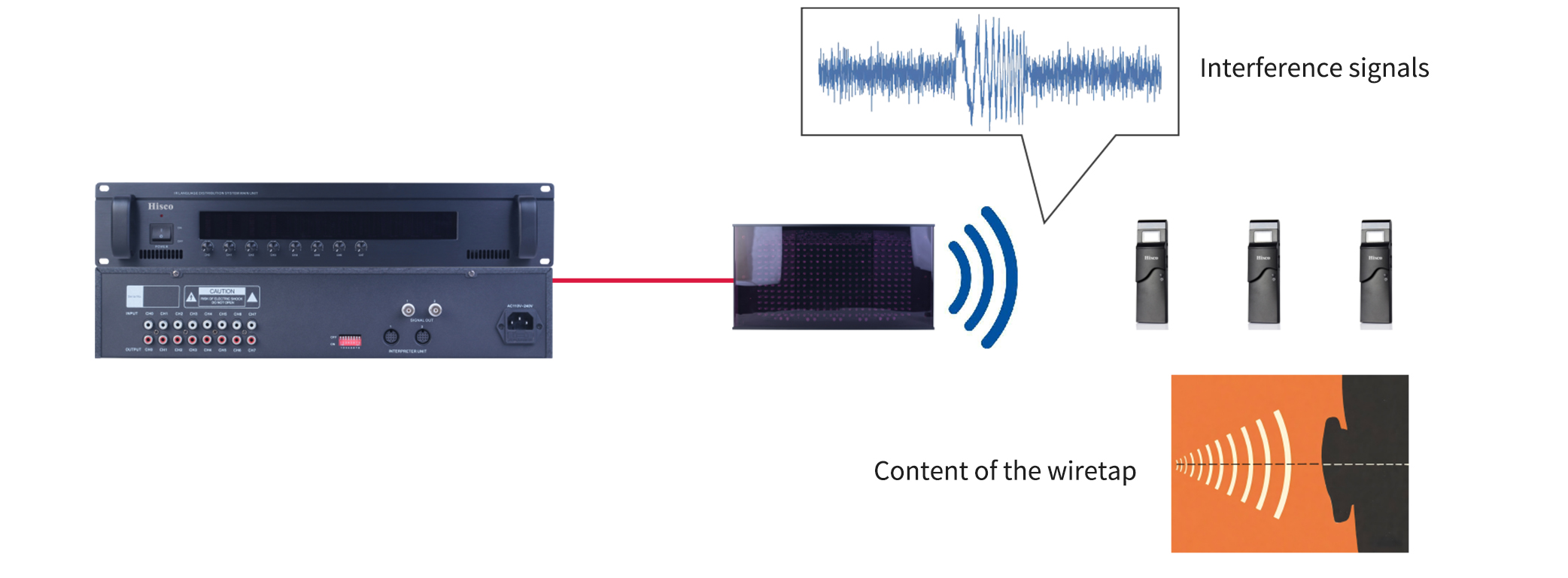
Key Encryption:
• Utilizes the most advanced encryption technology available today to completely prevent external malicious interference and eavesdropping, ensuring the independence of the receiving device.
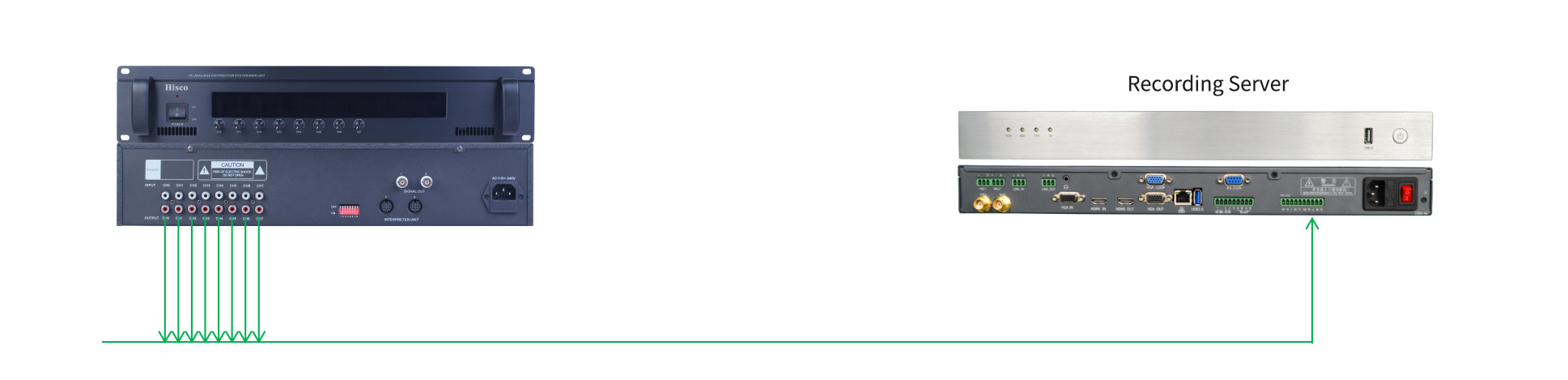
Multiple Audio Output Channels:
• Features multiple audio output channels for recording purposes
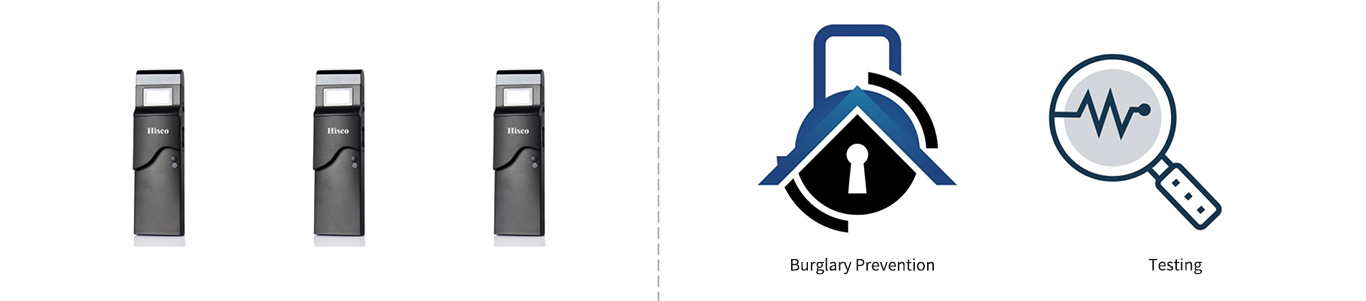
Anti-theft Detection:
• Features built-in anti-theft detection capabilities and supports external anti-theft detection devices to prevent loss
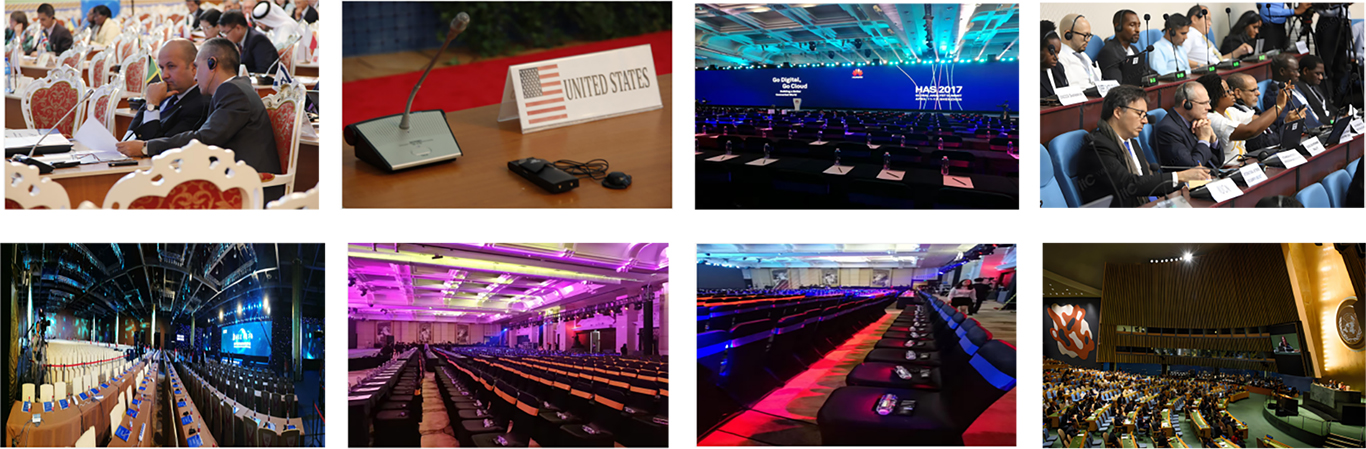
System Applications:
• Widely used in large, medium, and small-scale international conferences, multilingual instruction, and similar settings
• Also suitable for a wide range of fields, including diplomacy and foreign affairs, meetings and negotiations, business activities, news and media, training and lectures, television and radio broadcasting, and international arbitration
• Various academic presentations and video conference rooms
System Configuration:
Solution Configuration:
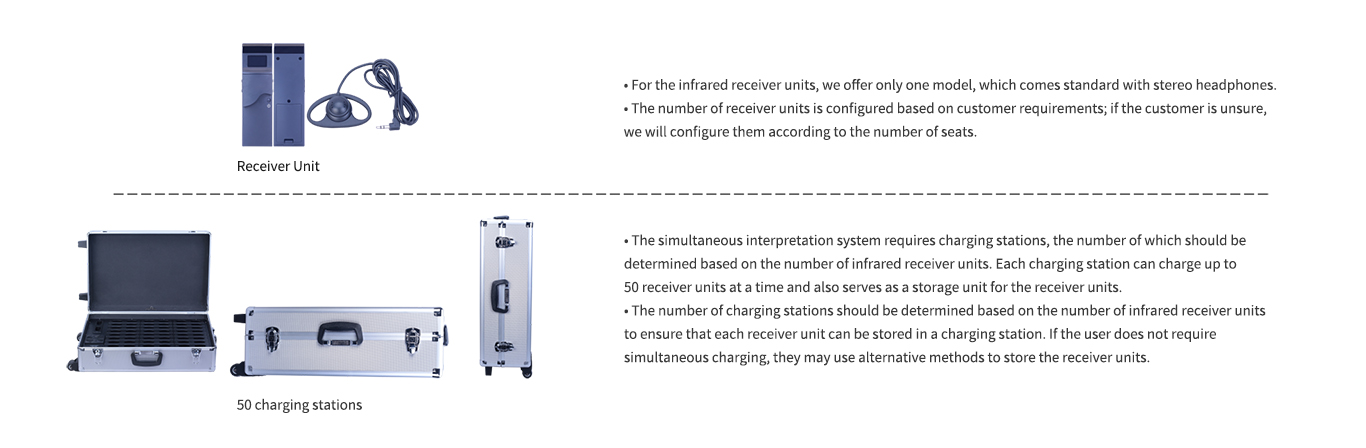
System Configuration:
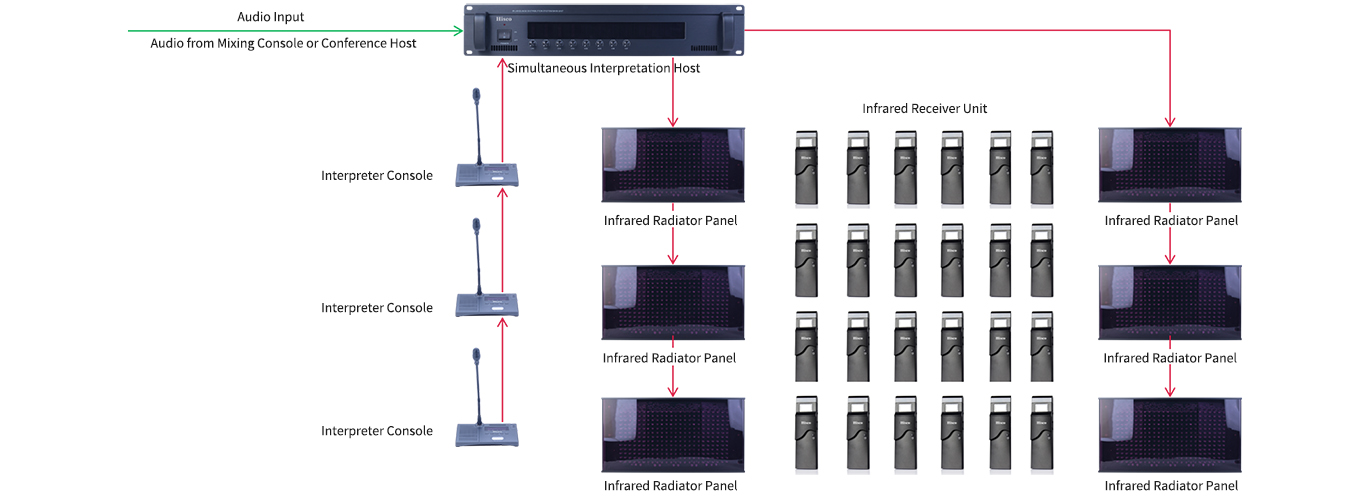
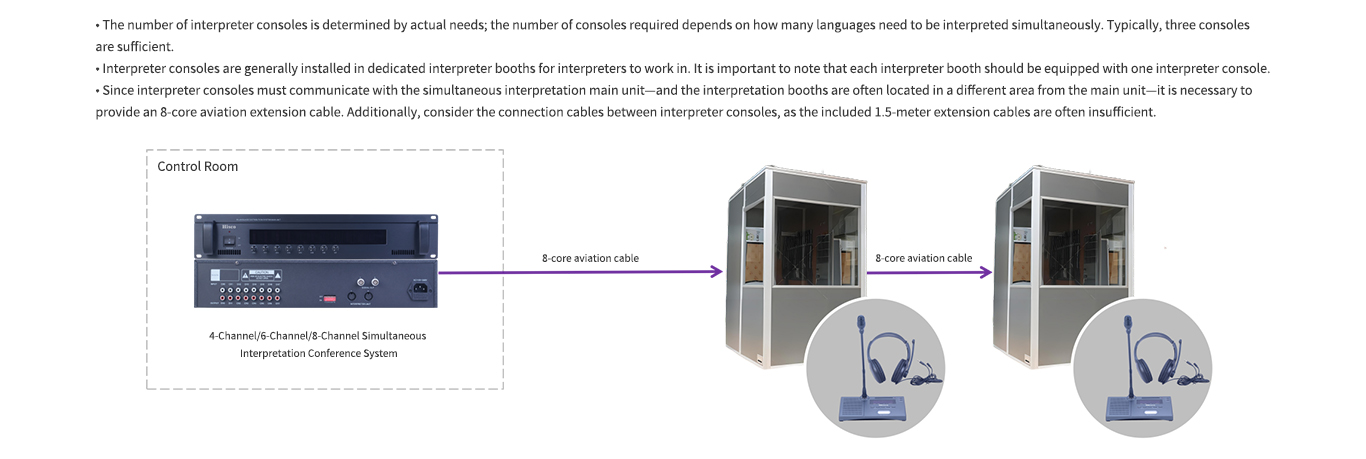
• The number of interpreter consoles is determined by actual needs; the number of consoles required depends on how many languages need to be interpreted simultaneously. Typically, three consoles are sufficient.
• Interpreter consoles are generally installed in dedicated interpretation booths for interpreters to work in. It is important to note that each interpretation booth should be equipped with one interpreter console.
• Since interpreter consoles must communicate with the simultaneous interpretation main unit—and the interpretation booths are often located in a different area from the main unit—it is necessary to provide an 8-core aviation extension cable. Additionally, consider the connection cables between interpretation consoles, as the included 1.5-meter extension cables are often insufficient.
System Configuration:
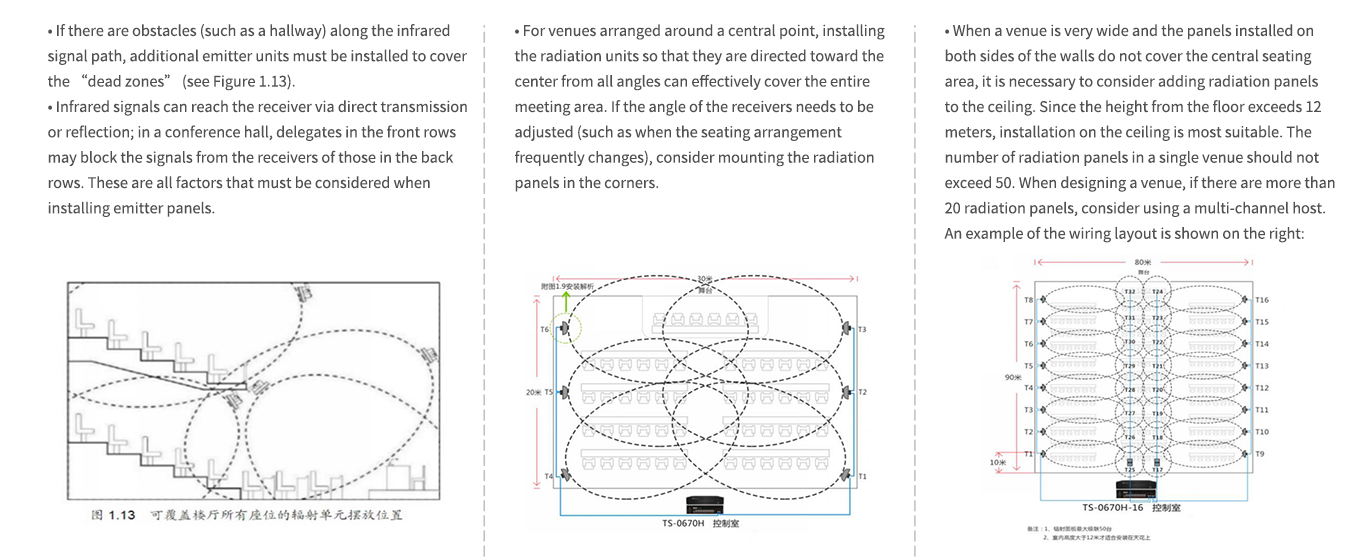
• First, thoroughly assess the venue’s area and ceiling height, and clearly understand the on-site table and chair layout. Next, confirm with the client which areas of the venue require infrared signal coverage. Particularly for simultaneous interpretation systems in large venues, it is essential to obtain detailed renderings of the finished interior design before proceeding with system configuration.
• In conditions with no reflections, very weak reflections, or where the distance exceeds the reflection range, the spacing between radiation panels must not exceed 10 meters.
• Radiating panels should be positioned symmetrically, ideally installed in pairs facing each other. They should be mounted in the corners of the room to ensure coverage of every corner.
• When designing the system, the longest cable run from the main unit to a radiating panel must be less than 100 meters. The longest cable run for cascaded radiating panels must be within 30 meters, and a 75-ohm terminating resistor must be connected to the end panel (included in the panel packaging).
• Use standard SYV-75-5-1 coaxial cable for installation; this is recommended to customers to ensure transmission quality and distance (coaxial cable between panels currently supports reliable transmission only up to 30 meters).
• Supports daisy-chain configuration; up to 10 radiation panels can be connected in a single chain.
• Ordinary glass and smooth white walls generally reflect infrared rays well. However, in environments such as small meeting rooms with black curtains or large exhibition halls with sound-absorbing wooden panels, infrared reflection is minimal.
• Generally, most indoor obstacles are relatively low, so radiant panels are typically installed at a relatively high position to create an angled beam toward attendees. Radiant panels should be installed at a height of 4 meters or higher whenever possible. This installation also increases the illuminated area and helps prevent poor signal reception at the receiver caused by people moving through the area or obstructing objects.
• The size and location of the coverage area depend on the installation height and angle of the radiation panel, and the coverage range can be adjusted based on the installation angle. A single radiation panel has a horizontal radiation angle of 50 degrees and a vertical radiation angle of 30 degrees.

Solution Configuration: