


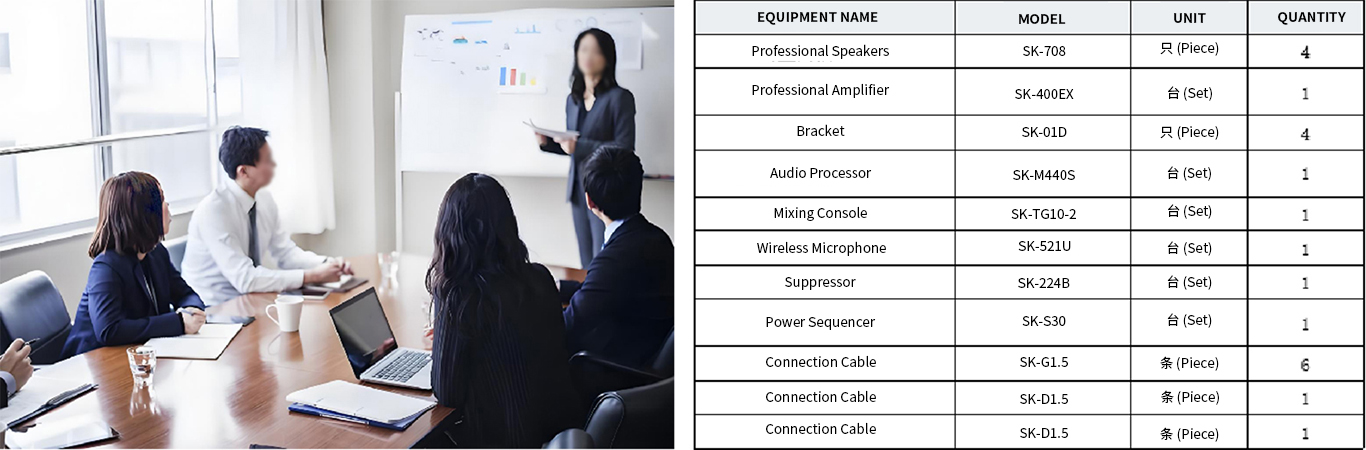
The setup for this conference room is relatively simple and is commonly used in small to medium-sized conference rooms. To adjust the volume in this room, someone must leave their seat and manually operate the faders on the OBK-TG10-2 mixing console. To start a meeting, participants must open the equipment cabinet, turn the key, and activate the OBK-830 power sequencer. Isn’t that a bit cumbersome?
To make this conference room a bit smarter, you’d need to add a central control unit, control panel, router, and other equipment—which would increase the budget by tens of thousands.
Example 2:
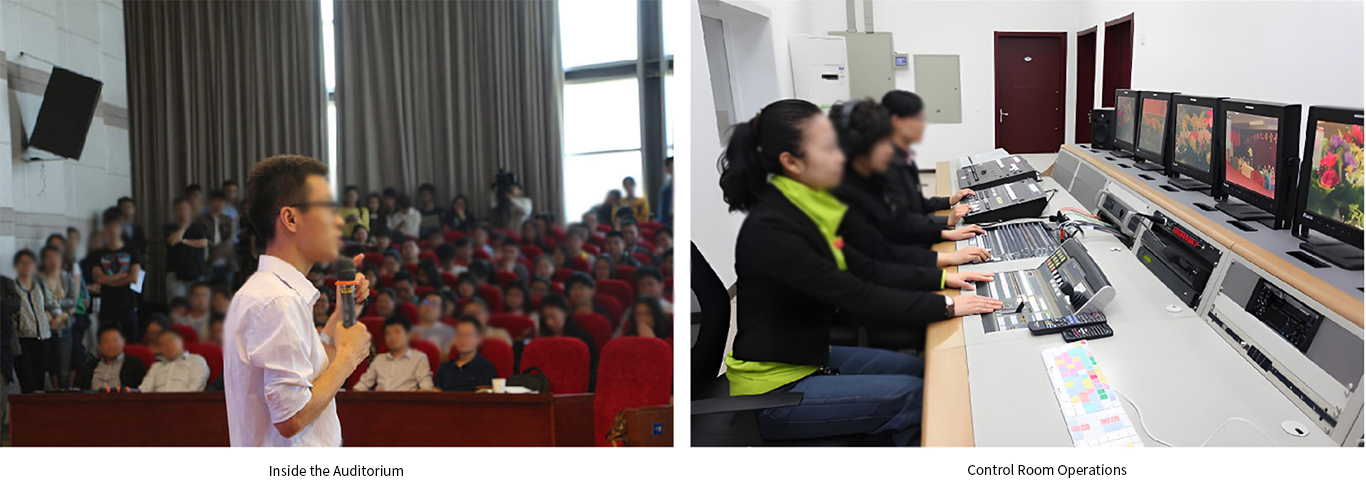
When giving a speech in an auditorium, speakers sometimes feel their voice isn’t loud enough and have to call out to the control room staff to turn up the volume, which can disrupt their performance. It would be so much better if speakers could adjust the volume themselves right there in the auditorium.
Overview of AI Microphones:
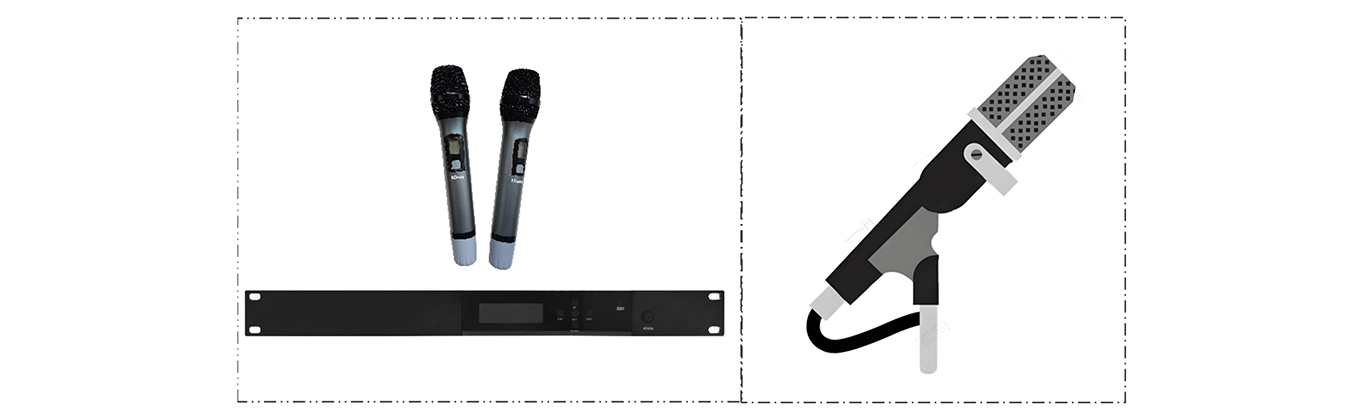
An AI microphone is an audio input device that integrates artificial intelligence technology. It is more than just a traditional sound-capturing tool; it also features powerful intelligent control capabilities. Through built-in advanced sensors and smart chips, the AI microphone can accurately capture sound and process it intelligently. It automatically reduces noise and eliminates ambient interference to ensure clear, pure audio. Additionally, it features speech recognition capabilities, enabling it to convert speech into control signals and provide voice control for connected devices.
AI Microphone Architecture Diagram:
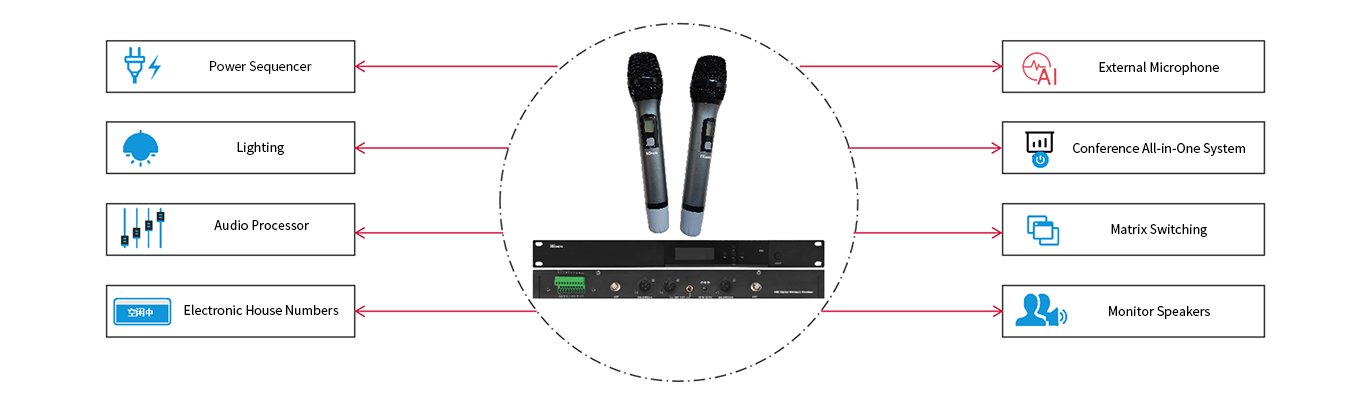
AI Microphone Features:
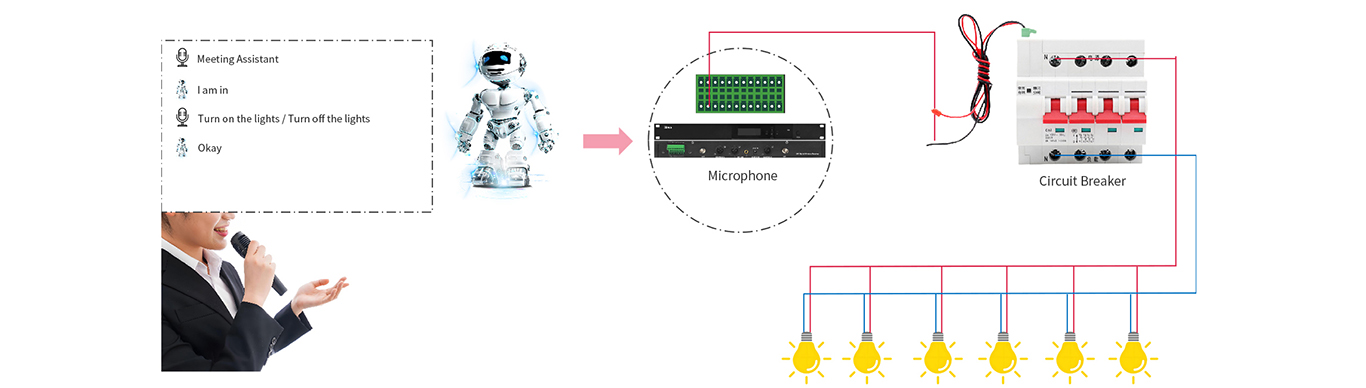
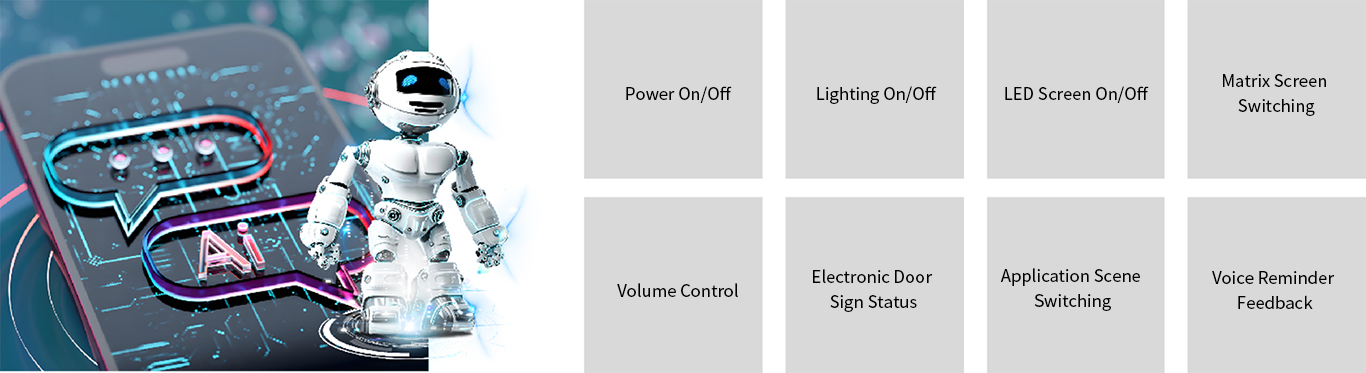
1. Integrated AI voice module that supports voice command control. After voice wake-up, it can control power, lighting, LED screens, video switching, volume adjustment, entrance signage, and scene switching, and provides voice prompts and feedback.
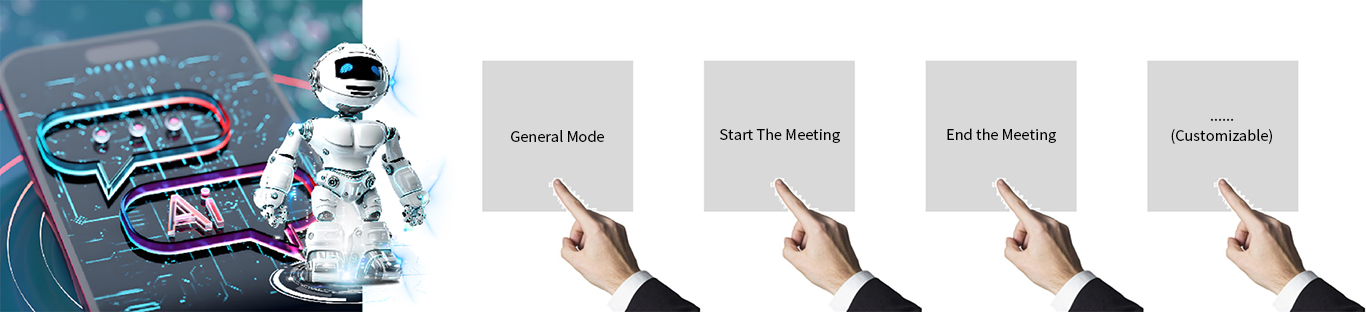
2. Customize preset usage scenarios, such as video conference mode, general mode, start meeting, and end meeting, which can be quickly switched using voice commands.
Application Scenarios:
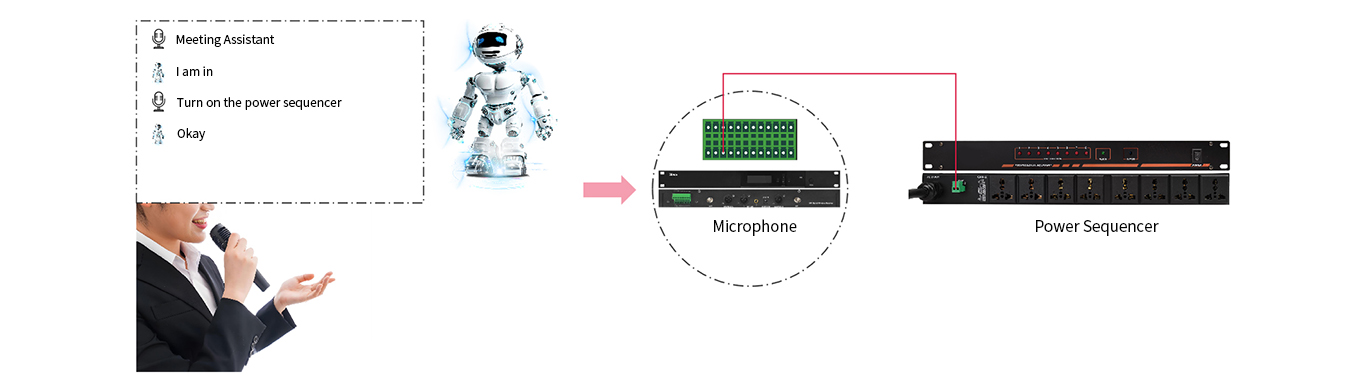
I. Control Power Sequencer:
Solution Configuration: OBK-526 series or OBK-522DM/OBK-522LM/OBK-522DZ/OBK-522LZ + power sequencer (it does not have to be the SK-830; any model with digital input signals can be used).
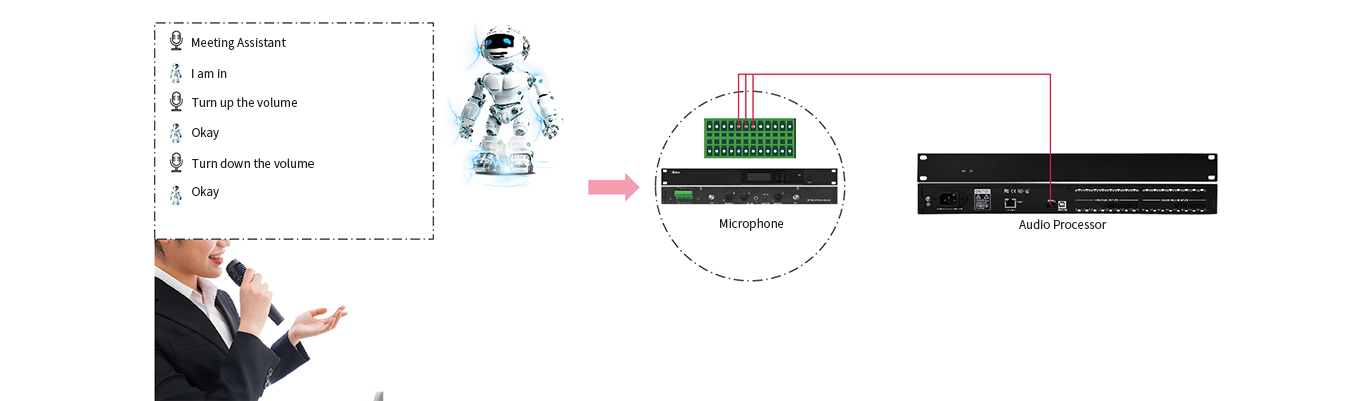
II. Volume Control Processors:
System Configuration: OBK-526 series or OBK-522DM/OBK-522LM/OBK-522DZ/OBK-522LZ + audio processor (can only be used with matrix-type systems, such as OBK-MA440S… OBK-MAL84… Cannot be used in conjunction with the OBK-RC24P, RC26P, RC28P, PC36P, RC46P, RC48P, OBK-213H, OBK-211H, or OBK-212H. Not compatible with audio processors from other manufacturers.
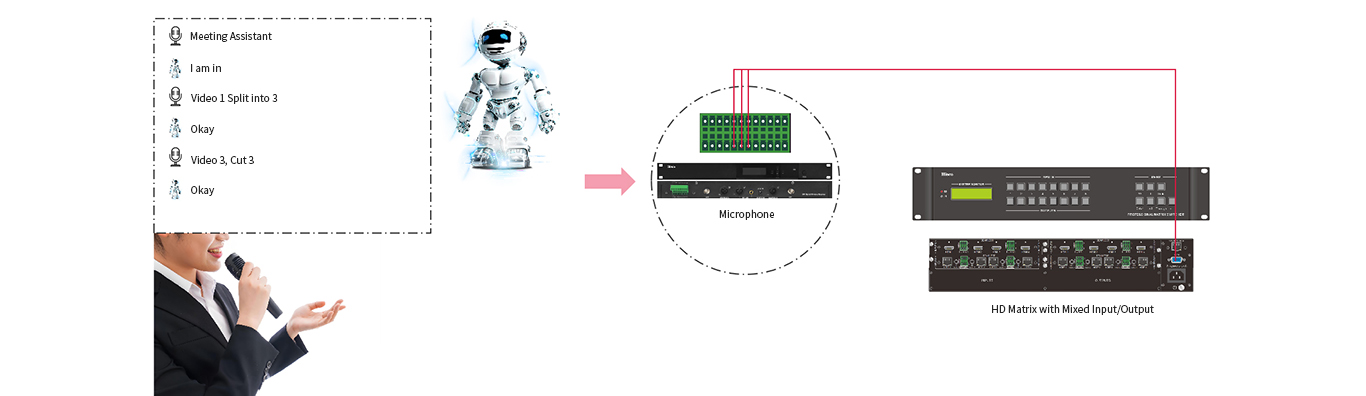
III. Matrix Switching Control:
System Configuration: OBK-526 Series or OBK-522DM/OBK-522LM/OBK-522DZ/OBK-522LZ + Matrix (OBK-9400 Series, OBK-9500 Series, or all-in-one matrices OBK-8804HD/OBK-8808HD/OBK-8816HD/OBK-8704HD/OBK-8708HD/OBK-8716HD. Not compatible with matrices from other manufacturers.
IV. Lighting Switch Control:
System Configuration: OBK-526 Series or OBK-522DM/OBK-522LM/OBK-522DZ/OBK-522LZ + Air-Operated Switch (Any device with a digital input signal can be used.)