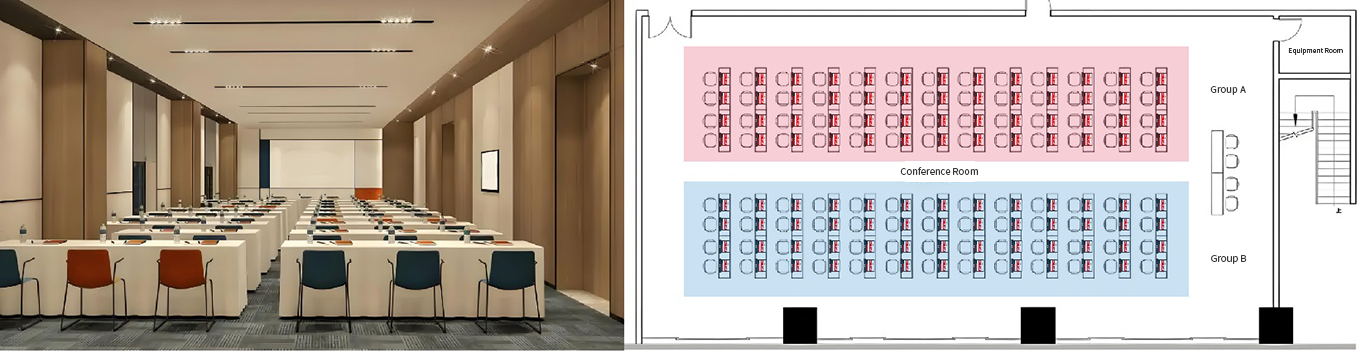



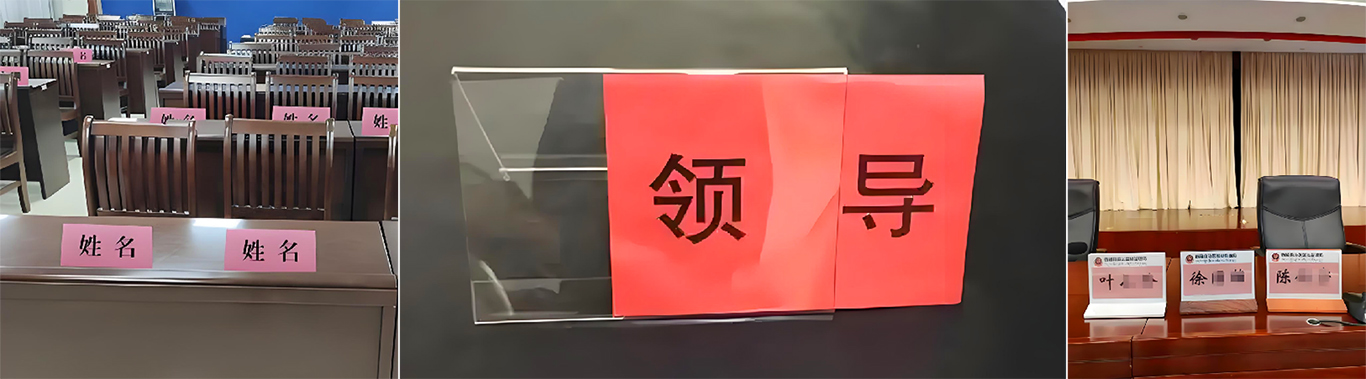
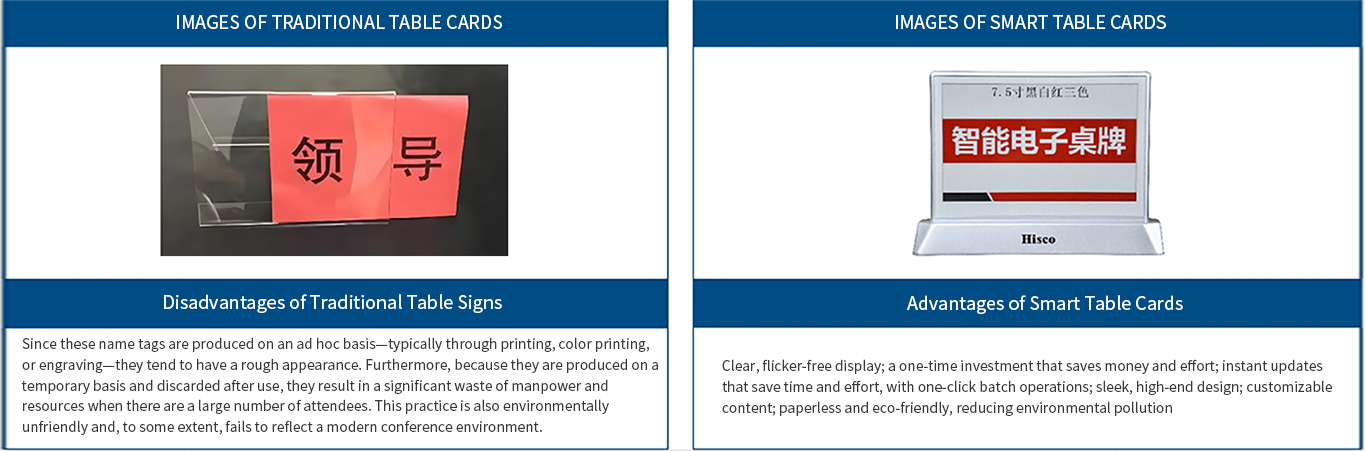
In the day-to-day operations of most companies and public institutions, meetings are frequently held to discuss and resolve work-related issues. Traditional meeting practices rely on paper documents for distribution, storage, and organization. Since these name tags are produced on an ad hoc basis—typically through printing, color printing, or engraving—they tend to have a rough appearance. Furthermore, because they are made on a temporary basis and discarded after use, they result in a significant waste of manpower and resources when there are a large number of attendees. This practice is also environmentally unfriendly and, to some extent, fails to reflect a modern meeting environment.
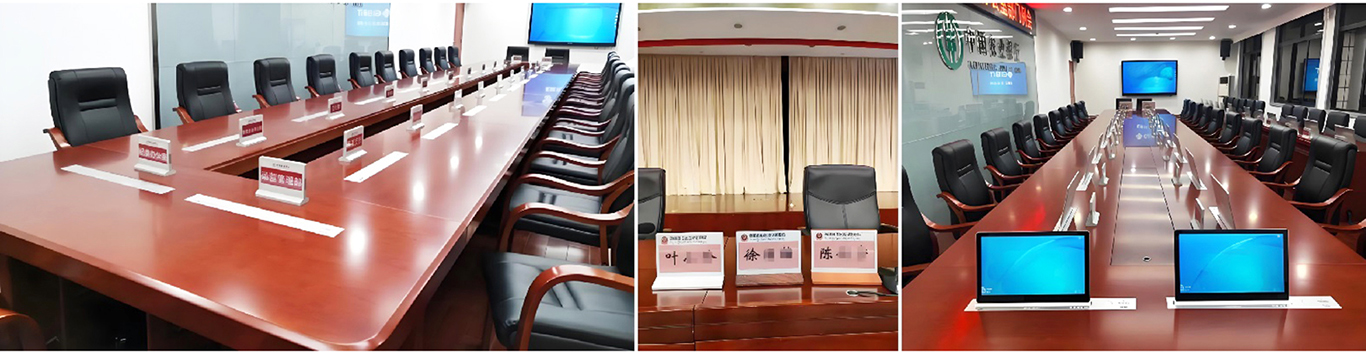
E-ink Electronic Nameplate Concept:
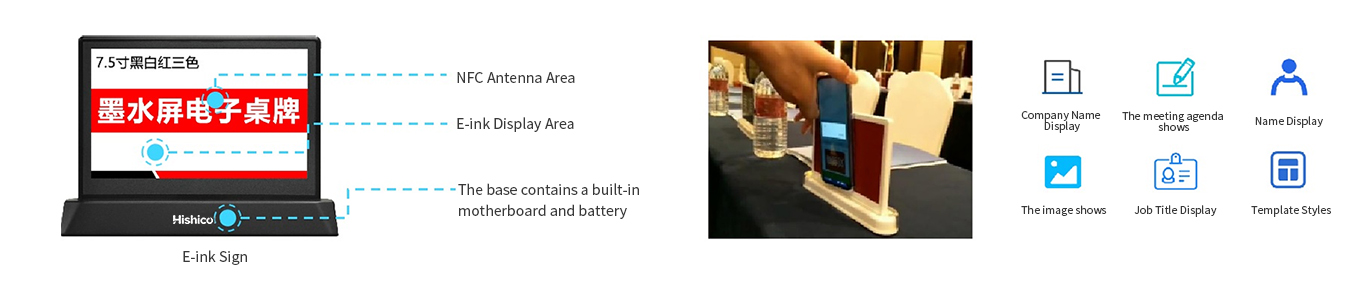
Utilizing e-ink technology, this device displays information with a paper-like appearance and offers the advantages of low power consumption and clear visibility even in bright sunlight. Content—such as meeting participant information—can be updated remotely via Wi-Fi, NFC, and other methods, making it a convenient and efficient information display device.
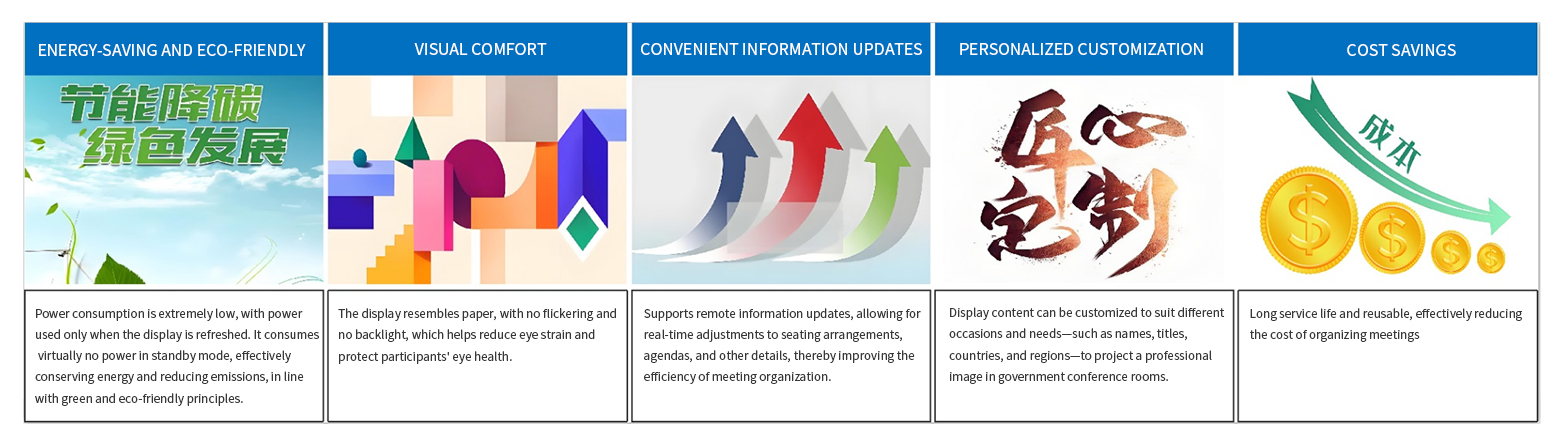
Ink Brand Features:
Differences Between Traditional Table Signs and Smart Table Signs:
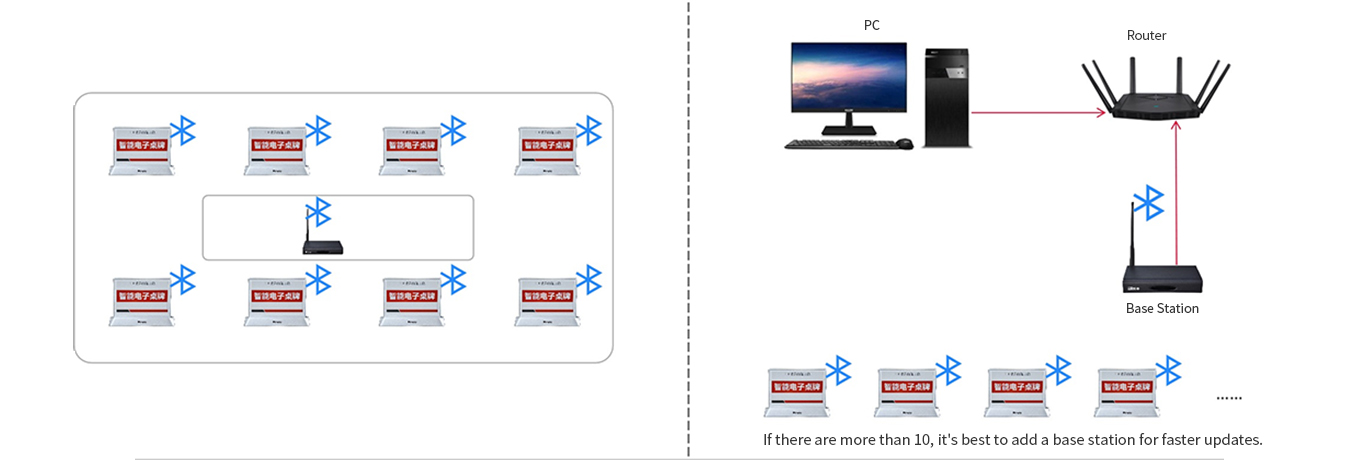
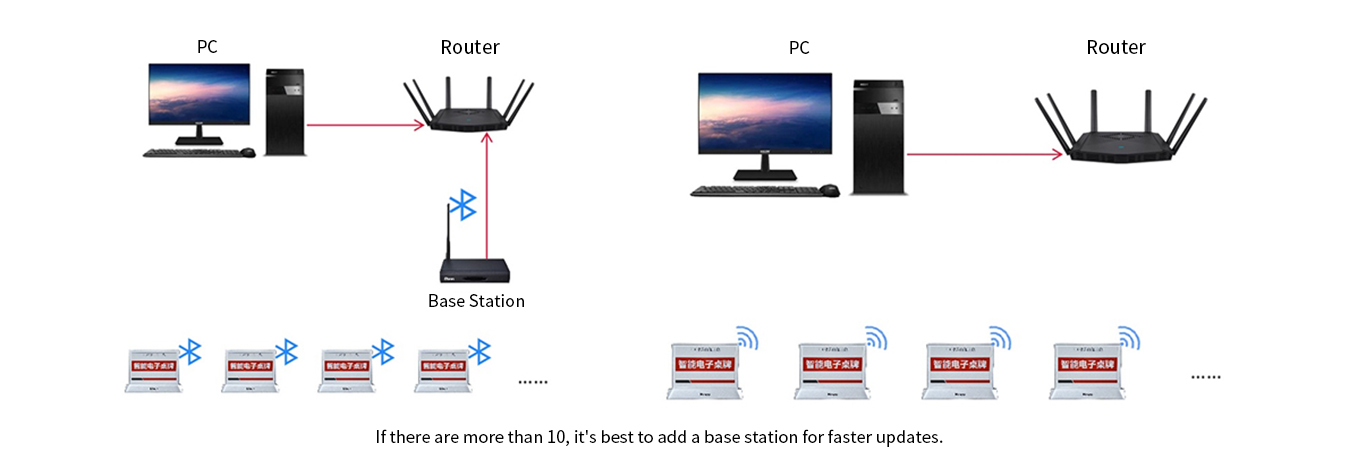
System Architecture (Bluetooth):
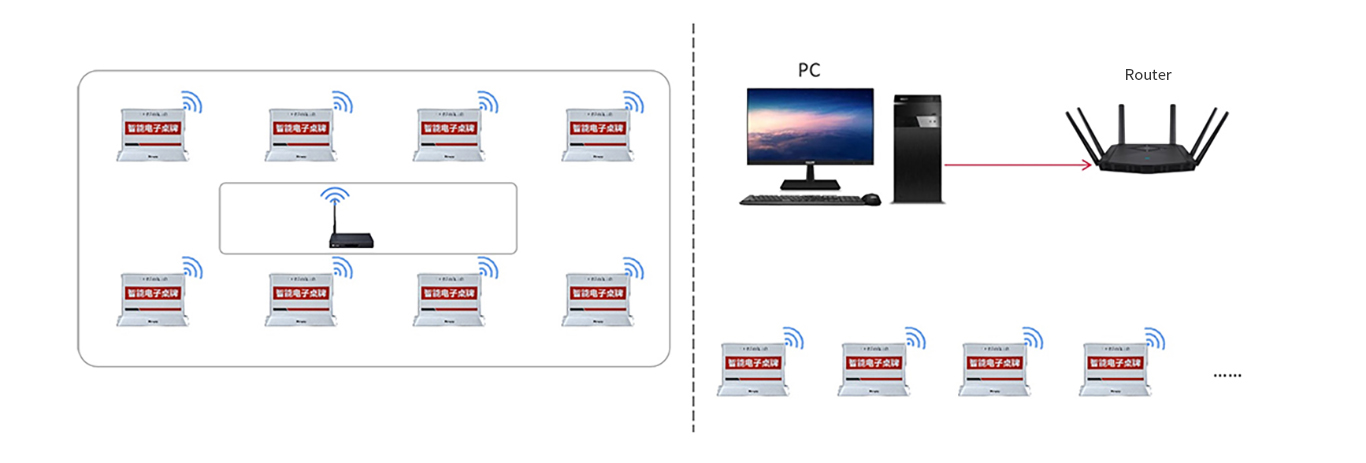
System Architecture (Wi-Fi):
Features:
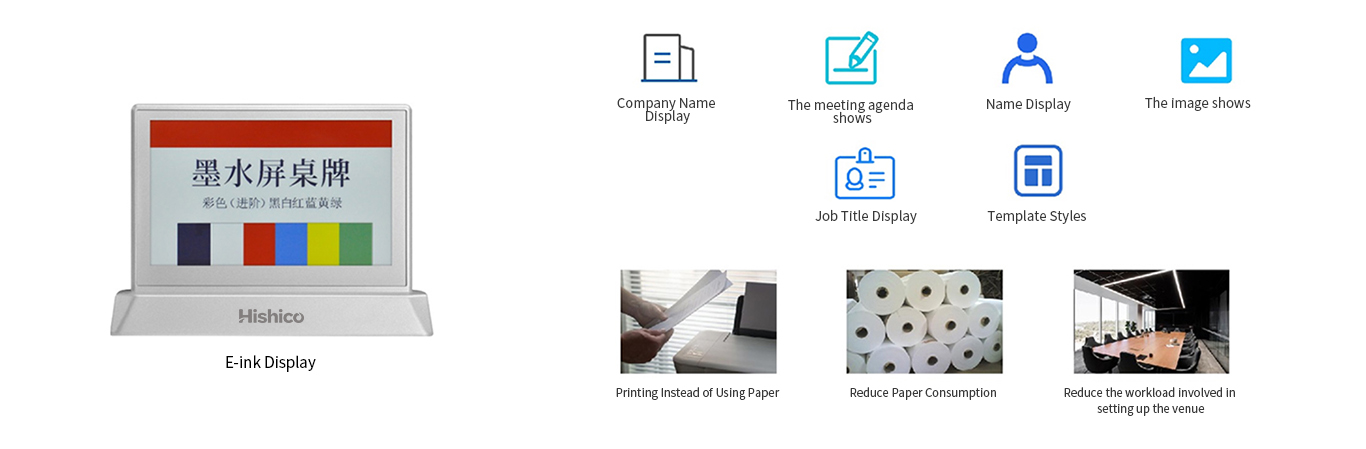
1. Paperless Display: The display panel uses an electronic ink screen, which is more eco-friendly and low-carbon. Not only does it replace traditional paper printing—reducing consumption of paper and other materials, minimizing the workload involved in setting up meeting venues, and significantly cutting labor maintenance costs—but it also lends a sophisticated and elegant look to any meeting venue.
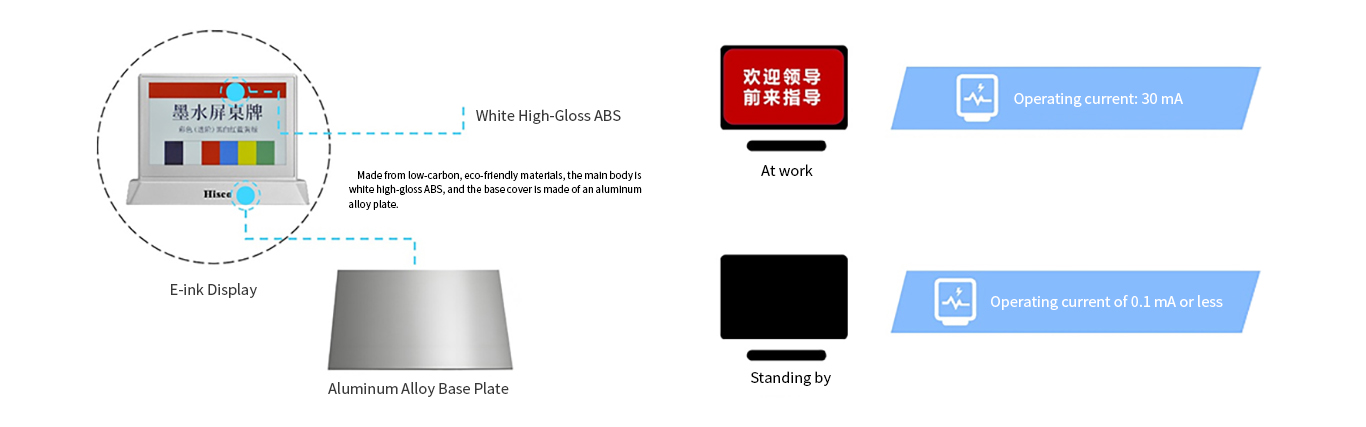
II. Ultra-Low Power Consumption: The device uses a more eco-friendly e-ink display that consumes “zero power” during normal operation. It only draws power when refreshing the screen, resulting in extremely low power consumption: 30 mA during screen refresh and less than 0.1 mA in standby mode. It is powered by a built-in AA battery, coin cell, or lithium battery, eliminating the need for recharging.
III. Wireless Deployment: Supports wireless transmission protocols such as Bluetooth, NFC, and Wi-Fi. Combined with the device’s ultra-low power consumption, it eliminates the need for power cords and data cables, enabling truly wireless deployment and offering great freedom and flexibility in use.
IV. Product Variety:
1. Available in a variety of colors, including silver, gray, black, white, or wood grain; the default finish is silver.
2. Some models support Bluetooth and NFC, while others support Wi-Fi.
3. Available in 7.3-inch, 7.5-inch, and 10.2-inch sizes (custom).
4. Available in T-shaped and A-shaped designs (custom).

V. Ultra-Long Transmission Range:
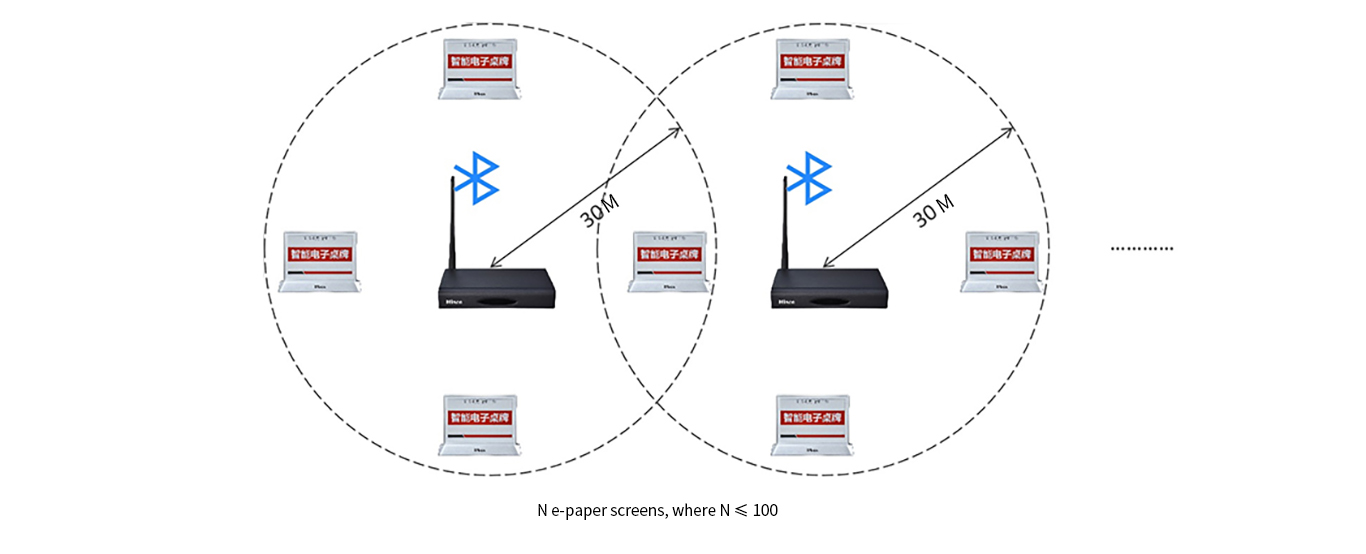
Supports the expansion of multiple Bluetooth base stations, with a maximum of 100 connected base stations; the wireless Bluetooth communication range reaches up to 30 meters, providing extensive coverage.
VI. NFC Update:
Hold your Android phone near the nameplate; the update will be completed in about 5 seconds. The displayed content can be edited directly in the mobile app, eliminating the need for pairing. This method offers fast and convenient updates and is suitable for settings with a small number of nameplates—we recommend it for venues with 10 or fewer nameplates. For venues with more than 10 people, Bluetooth or Wi-Fi updates are recommended for greater efficiency.
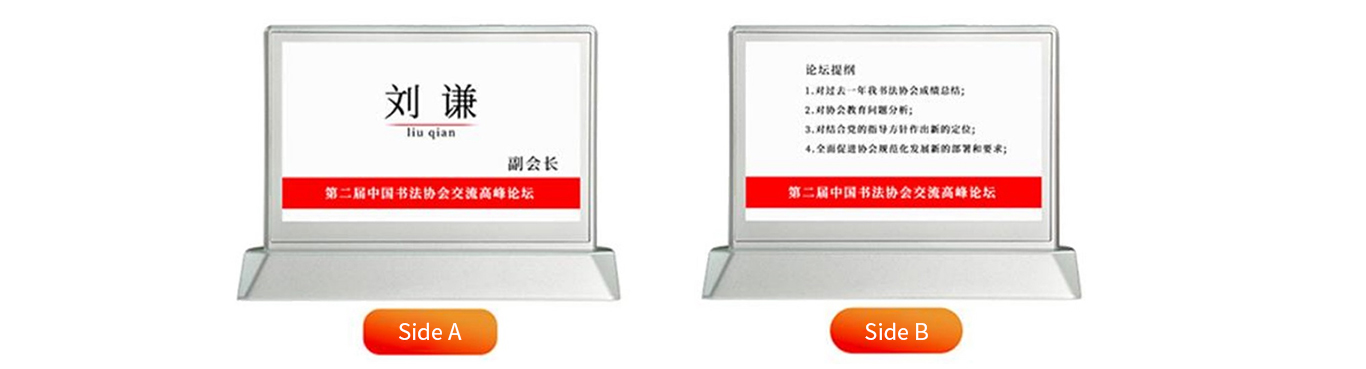
VII. Dual-sided, independent display:
E-ink screen capable of displaying different content on each side; content can be edited independently, including: meeting agendas, content prompts, key summaries, task assignments, seating guides, etc.
VIII. Group Management:
Real-time monitoring of table status and group management ensure that different venues do not interfere with one another.