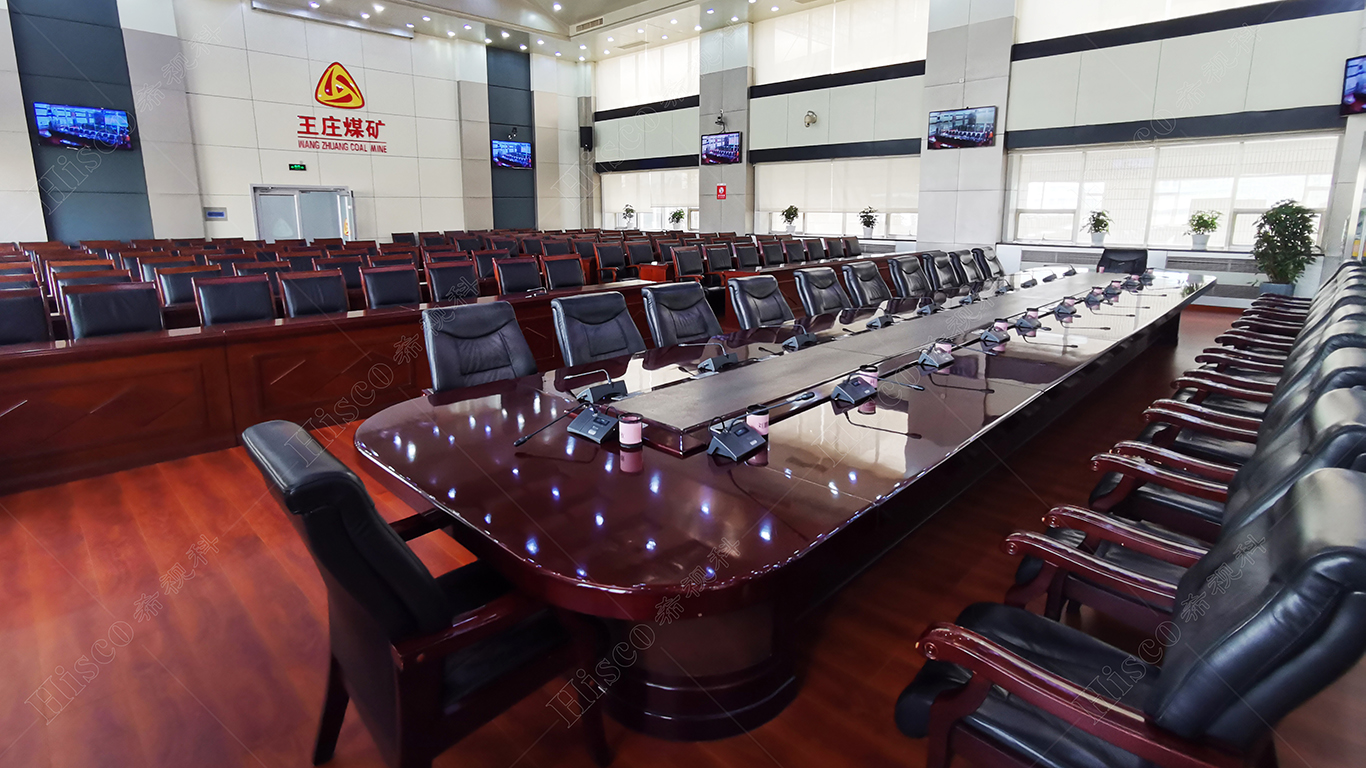
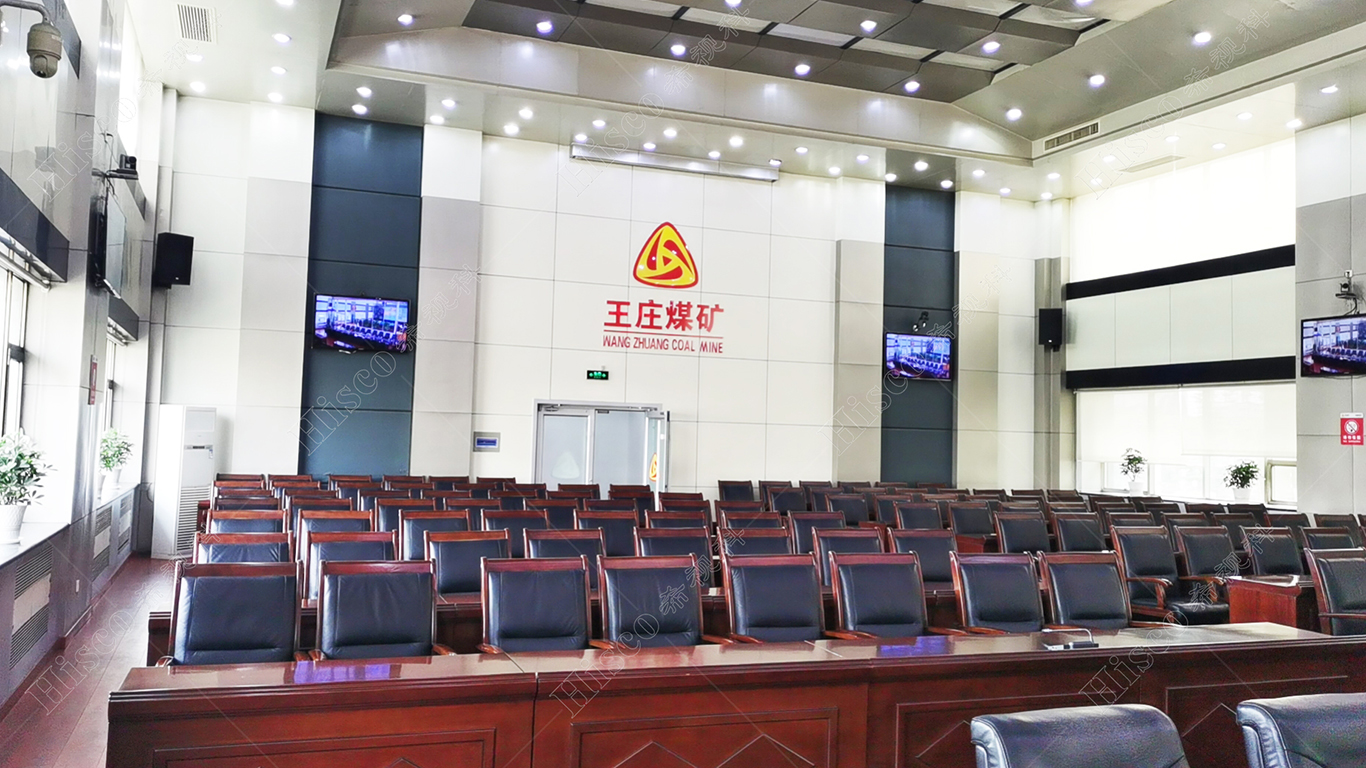
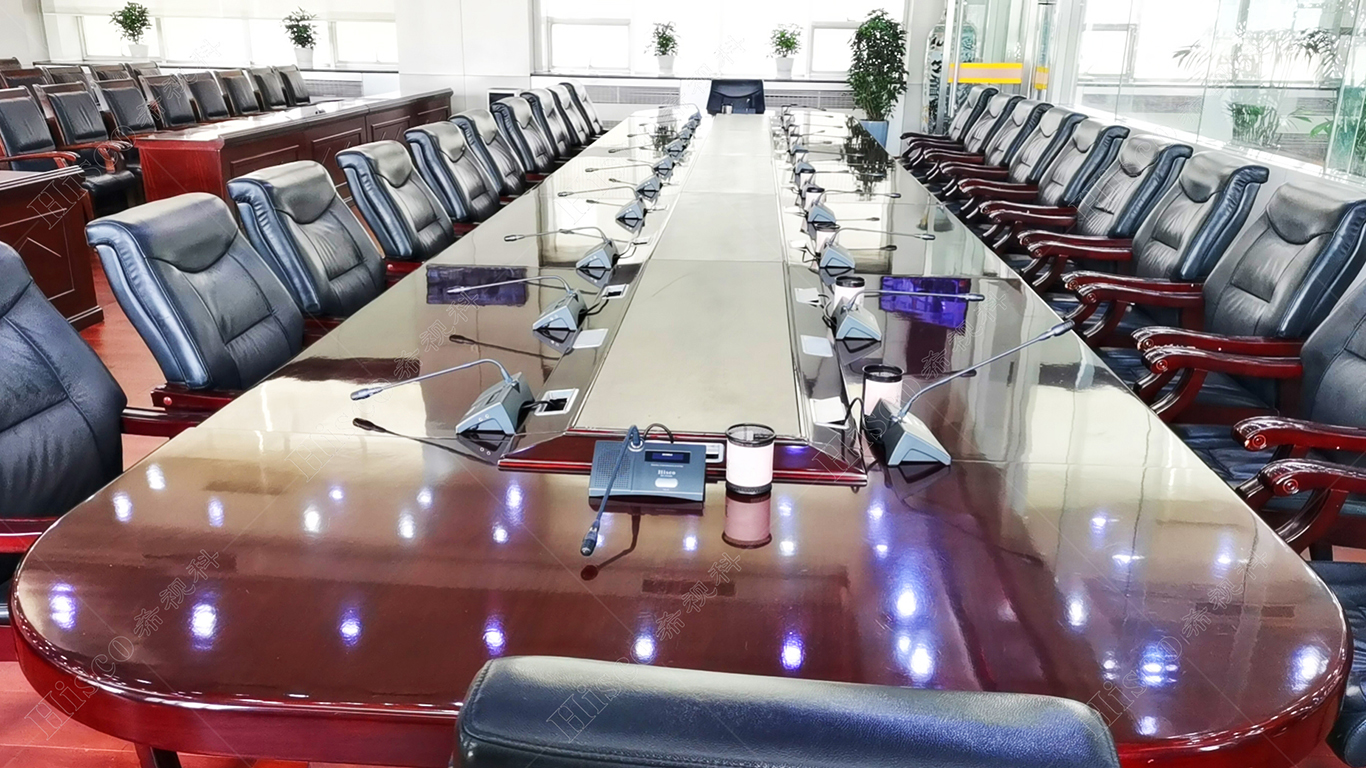
Hishico professional audio enhancement systems, advanced remote video conferencing technology, integrated central control management, and cutting-edge digital conference solutions have been successfully deployed in the conference rooms of Wangzhuang Coal Mine.
Preface:
• Wangzhuang Coal Mine of Lu'an Group is a nationally renowned top-grade, high-yield, high-efficiency modernized mine. The mine was completed and put into operation in December 1966, with an original designed capacity of 900,000 tons. After two expansions and renovations, as well as continuous upgrades to its production systems, the mine's annual production capacity has reached over 7.1 million tons. It operates two highly efficient fully-mechanized mining teams and two highly efficient fully-mechanized excavation teams.
I. Project Overview:
• In undertaking the construction project for the conference rooms at Wangzhuang Coal Mine, we have meticulously designed and implemented a comprehensive meeting system. This system incorporates professional-grade audio enhancement technology, ensuring clear sound quality and stable transmission, thereby improving the effectiveness of meeting communications. At the same time, we have introduced cutting-edge remote video conferencing solutions, enabling cross-regional collaboration and communication, which greatly enhances work efficiency and the speed of decision-making. Furthermore, we have deployed an integrated central control management system that allows unified control of multiple functions within the conference rooms, streamlining operational procedures and ensuring the smooth execution of meetings. Through these advanced digital conference solutions, we have not only significantly enhanced the interactive meeting experience but also ensured the security and real-time nature of information exchange.
II. Project Requirements:
Based on the usage requirements of the conference rooms, the following objectives are to be achieved:
1) On the basis of ensuring technologically advanced, stable, reliable, and competitively cost-effective systems, we have implemented meticulous optimization design to maximize economic efficiency, thereby effectively conserving enterprise resources.
2) The sound reinforcement system shall comply with the national standard for speech reinforcement, delivering clear and intelligible audio. All design parameters shall reference the standards set forth in the *"Code for Design of Sound Reinforcement System in Auditorium, GB/T 28049-2011"*.
3) Through precise acoustic positioning technology, this system ensures accurate localization and eliminates any occurrence of tilt or deviation.
4) The sound reinforcement system features high-sensitivity speech units for conference discussion, with the chairman's speech unit equipped with a priority speaking function.
5) The system features seamless audio and video switching capabilities to accommodate various signal sources and different usage scenarios.
6) This system is equipped with efficient remote video conferencing functionality, specifically designed to meet the enterprise's needs for convening critical remote meetings, thereby facilitating work coordination among various departments. It supports real-time remote reporting, exchange of discussions, and task processing, significantly improving work efficiency and ensuring rapid information flow and efficient decision-making execution.
7) The system features recording and broadcasting functionality. For important meetings, it is necessary to record and store on-site audio and video content for future reference. Additionally, it provides applications such as online live streaming, post-meeting video-on-demand, and resource integration.
8) The system achieves completeness, integrity, and perfection by integrating lighting control, large-screen display, and audio-visual control capabilities into a unified platform, eliminating cumbersome operations. With just a single button on a tablet computer, different meeting modes can be launched according to programmed sequences, simplifying the operational process and facilitating ease of use.
III. Solutions:
1. Professional Sound Reinforcement Subsystem:
• The key to a well-designed conference room acoustic system lies in ensuring sound clarity and comfort, so that speech content is well-layered and easy to comprehend. Additionally, the sound should possess appropriate flexibility, giving statements a rhythmic quality. The spatial positioning of sound must be accurate and free of deviation, creating a natural experience akin to face-to-face communication.
In acoustic design, three conditions are essential for achieving high-quality sound reinforcement in an auditorium:
1) A favorable architectural acoustic environment.
2) A well-configured audio system setup.
3) Scientifically based system commissioning and calibration.
• The sound reinforcement design for this conference room is carried out in accordance with the standards set forth in the *"Code for Design of Sound Reinforcement System in Auditorium, GB/T 28049-2011"*, tailored to the specific characteristics of the conference room.
• Our team has not only ensured the rational configuration of the conference room audio system but also possesses expert-level construction and commissioning personnel to perform precise system adjustments. During the construction phase, technical staff meticulously measured and marked the position and height of each loudspeaker, confirming that the load-bearing capacity of each mounting point is at least 2.75 times the weight of the loudspeaker, thereby ensuring that safety remains the top priority of the system.
2. Multimedia Recording and Broadcasting Subsystem:
• The advancement of intelligent digital technology has led to increasingly frequent meetings, along with a growing demand for archiving critical meeting videos. This includes enhancing in-meeting interaction, enabling real-time information exchange, and providing remote on-demand access services for those unable to attend in person.
Based on the user's requirements and the project's actual budget profile, we have designed a multimedia recording and broadcasting system. The conference recording and broadcasting system designed for this project implements the following functions:
1) Recording and storage of on-site footage, PPT presentations, speech audio, and multimedia audio-visual content during meetings. The recording utilizes multiple network stream encoding, enabling simultaneous recording of multiple meeting videos.
2) Provision of online high-definition live streaming, facilitating remote participation for those unable to attend, with support for over 1,000 concurrent online video viewers.
3) Post-meeting on-demand playback. The recording and broadcasting host features a built-in VOD (Video on Demand) module, requiring no additional plugin installation, allowing online on-demand playback of video files via the network. This enables post-editing and subsequent burning onto DVDs for industry exchange or departmental sharing and learning. The content can be reused multiple times, improving training efficiency and reducing training costs.
4) Multi-screen monitoring. The system supports simultaneous display of multiple screens.
5) Automatic tracking recording. The system supports meeting tracking functionality. When a participant speaks and presses the microphone's talk button, the conference recording and broadcasting host receives the command and controls the camera to move and track to the speaking position, achieving synchronized meeting video tracking.
6) Resource integration. A professional recording and broadcasting device integrating production and platform management functions for video file management.
7) Low bandwidth consumption and resource efficiency. The system adopts the High Profile method—the highest level among the advanced H.264 video encoding algorithms—which reduces network bandwidth usage by 35% to 50% while maintaining original image clarity, and similarly saves 35% to 50% of disk storage space.
3. Central Control Matrix Subsystem:
• In the meeting environments of most enterprises, the operational management staff are often regular employees who generally lack professional audio-visual technical knowledge and control expertise. This frequently leads to operational errors during daily use. To address this operational complexity and the potential for mishandling, we have meticulously designed and implemented an advanced conference room central control system. This system comprehensively integrates audio and video management functions through an intuitive and simple user interface, enabling non-professionals to easily monitor and manage various meeting facilities.
• The design philosophy of this central control system is rooted in user experience, with the goal of reducing the complexity of equipment operation, enhancing operational efficiency, and ensuring smooth meeting proceedings. The system provides an integrated management platform through which users can monitor and control the working status of all devices in the conference room in real time. This not only greatly enhances the manageability of equipment and the stability of the system but also significantly improves the professionalism and efficiency of enterprise meetings, thereby contributing to the overall enhancement of the organization's operational performance.
IV. Summary:
• In the design of the conference room system for this professional field project, the management of the client has given high praise to the system's performance. They noted that the system stands out for its advanced technical features and user-friendly interface, ensuring smooth communication throughout meetings. Of particular note, the speech clarity and fullness of the microphones meet high standards, with well-defined sound layering that guarantees high-fidelity reproduction of the original voice.
• Meanwhile, the system's acoustic design and large-screen display achieve synchronized consistency, further enhancing the interactive experience among participants. The spatial layout has been carefully designed to ensure that sound is delivered directly to the front of each attendee. This sound field arrangement allows even participants seated at a distance to enjoy a natural and comfortable experience akin to face-to-face conversation. Such attention to detail reflects the professionalism and meticulousness of the system design, playing a key role in improving meeting efficiency and comfort.