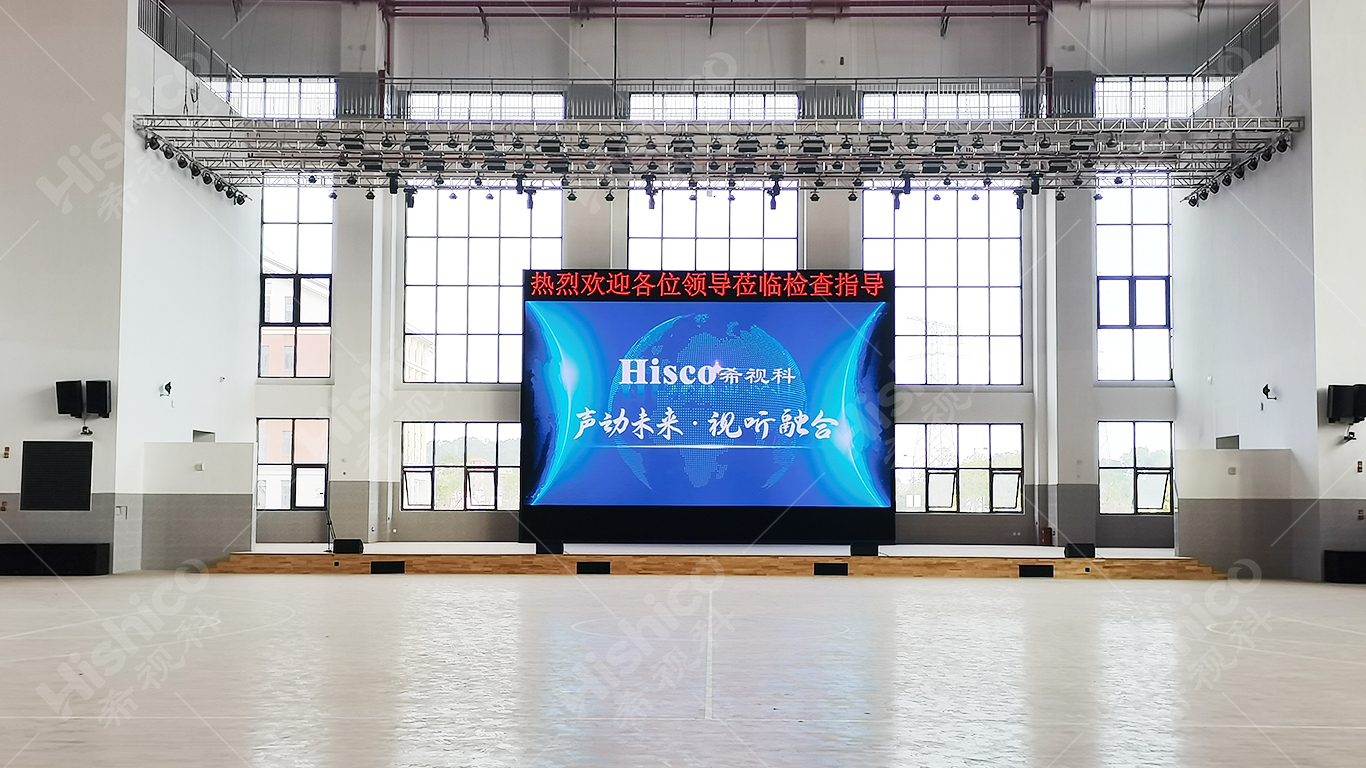
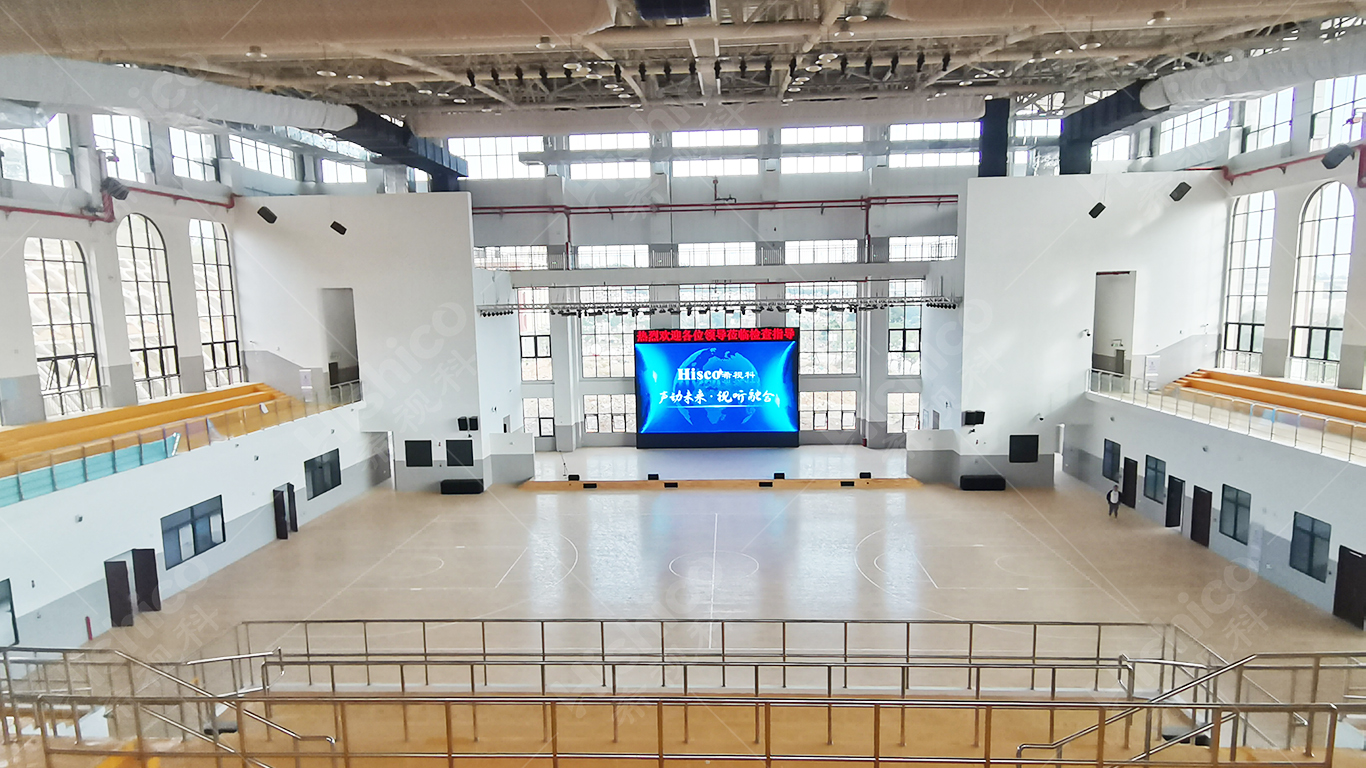
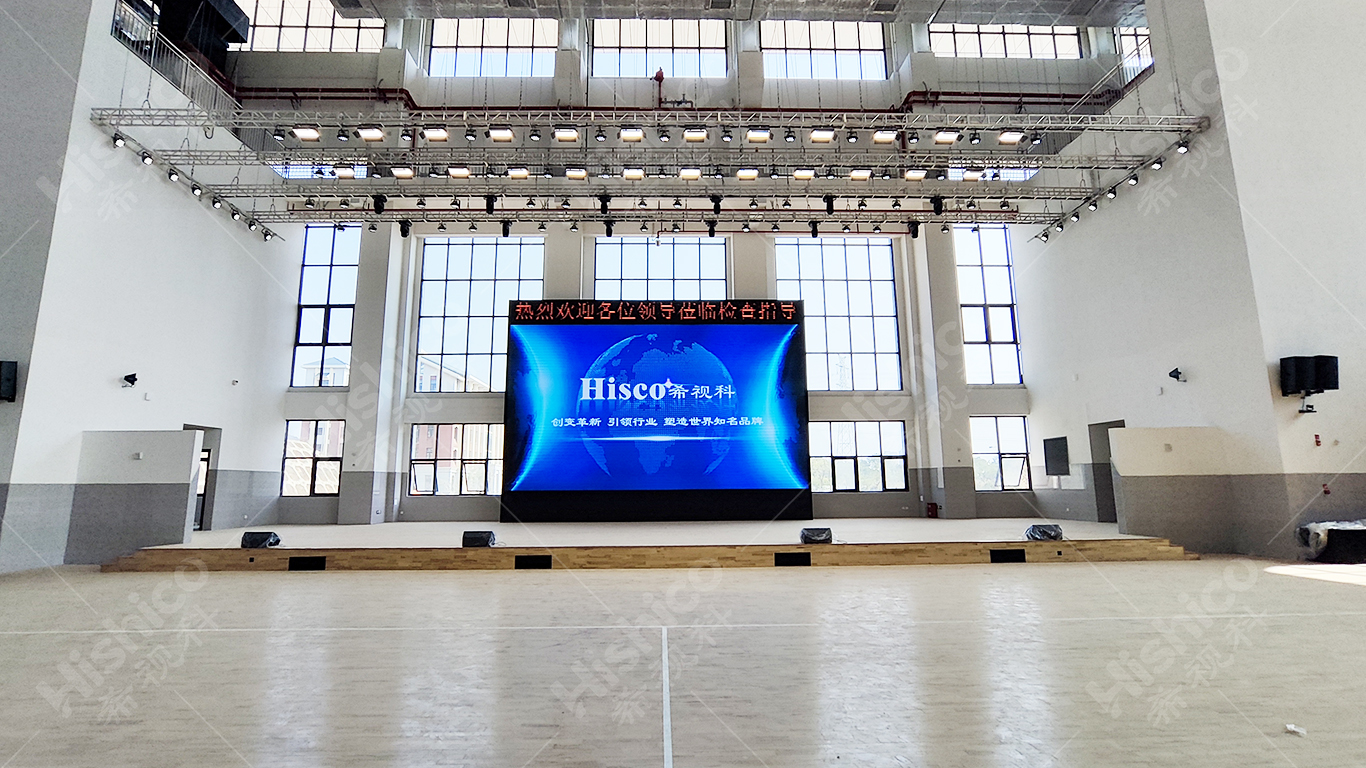
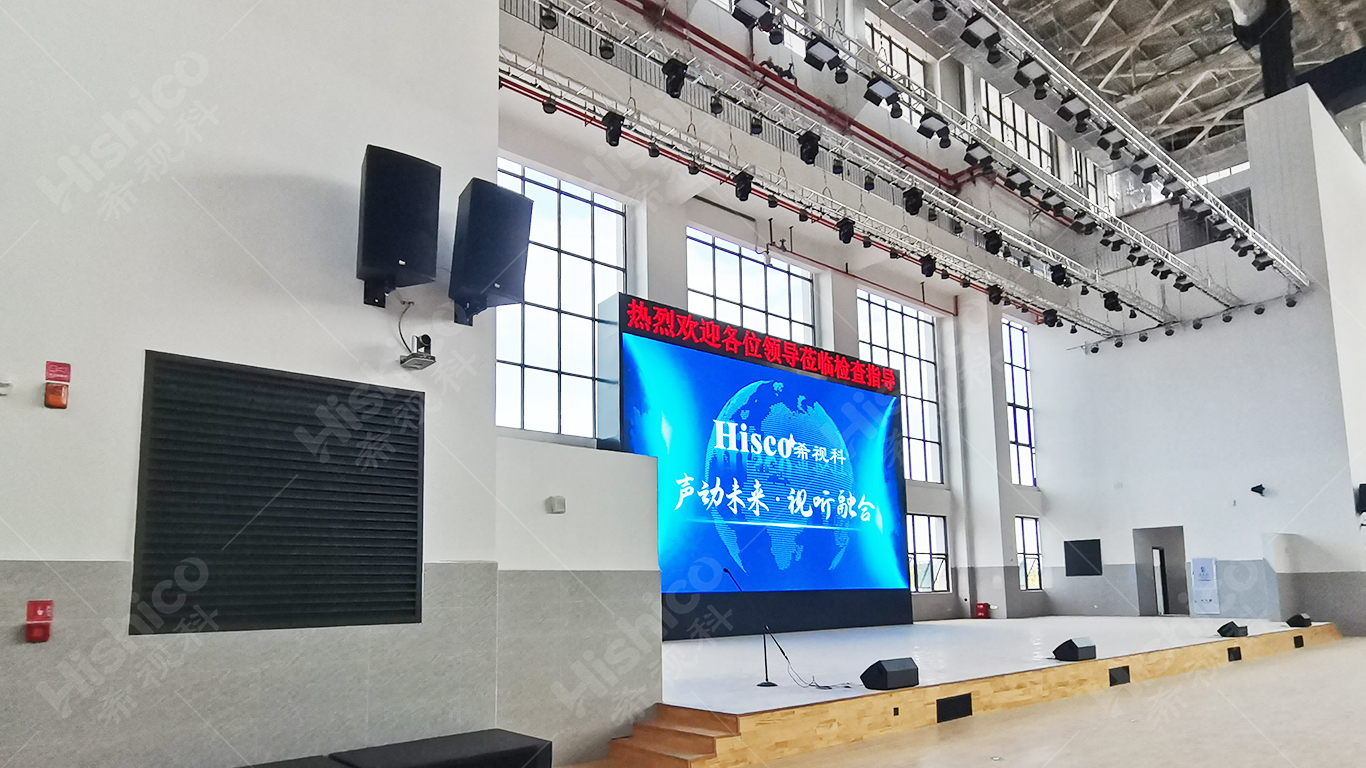
Quangang Vocational Education Center and Hishico Forge Deep Cooperation to Create a Cutting-Edge Smart Gymnasium and a High-Tech Auditorium with an Advanced Presentation Support System
School Profile:
Quangang Vocational Secondary School is a secondary vocational school located in Quangang District, Quanzhou City, Fujian Province. Founded in 1999, the school covers an area of approximately 100 mu and is one of the larger vocational education institutions in the region with well-equipped teaching facilities. The school is dedicated to cultivating students' practical abilities and professional competencies, providing them with a favorable educational environment and diverse teaching resources. Campus Facilities: Quangang Vocational Secondary School boasts first-class campus facilities, offering students excellent conditions for both learning and living.
Project Overview:
• In today's educational landscape, the continuous pursuit of innovation and technological integration is key to improving teaching quality and enhancing school competitiveness. To this end, we plan to construct a highly intelligent auditorium and a state-of-the-art gymnasium on campus. Both facilities will utilize industry-recognized high-quality Hishico brand equipment to ensure optimal performance and user experience.
• Specifically, the intelligent auditorium is designed with multiple considerations, including acoustics, visuals, and environmental control. We will introduce Hishico's professional sound reinforcement system, renowned for its clear and stable audio output, ensuring that the speaker's voice is evenly distributed throughout the auditorium so that every listener can receive information clearly. In addition, the stage lighting system has been carefully selected to provide appropriate illumination, not only highlighting the podium area but also adjusting the atmosphere according to different occasions.
• To achieve efficient management of various devices within the auditorium, such as lighting and audio, we will also implement a central control system. This allows operators to easily manage all technical elements through a simple interface, thereby enhancing overall work efficiency and ensuring the smooth execution of every event. Furthermore, the installation of a recording and broadcasting system will enrich the auditorium's functionality. It can not only record event content in real time for later playback or instructional use but also enable remote transmission, allowing those unable to attend in person to participate in activities.
Similarly, the construction of the intelligent gymnasium will adhere to the same high standards, providing teachers and students with a modern venue for sports activities and large gatherings. These initiatives will undoubtedly significantly enhance the school's hardware conditions, creating a more comfortable and efficient environment for learning and activities, while also elevating the school's overall image to a new level.
Project Requirements:
The client and the design institute have the following specific project requirements:
1.Ensure advanced, reliable, and high-cost-performance systems while achieving optimal economy and resource conservation through optimized design.
2.The video system must ensure that attendees from all angles in the venue can clearly see the displayed content.
3.The sound reinforcement system must meet the national first-class standard for multipurpose hall speech reinforcement systems, with clear and intelligible speech. Design indicators shall refer to the "Design Code for Sound Reinforcement System of Halls GB/T 28049-2011" standard.
4.The sound reinforcement system shall feature convenient wireless handheld microphone functionality.
5.The sound reinforcement system shall include high-sensitivity conference discussion microphones, with the chairman's microphone unit having priority speaking functionality.
6.The system shall have seamless audio-visual switching capabilities to meet the needs of various signal sources and different usage scenarios.
7.The system shall include remote video conferencing functionality to facilitate important remote academic meetings, enabling remote reporting, communication, and coordination between schools and with the Ministry of Education, thereby improving work efficiency.
8.The system shall have recording and broadcasting functionality. For important meetings, audio and video from the venue need to be recorded and preserved for future reference, and it should also provide applications such as online live streaming, on-demand playback after meetings, and resource integration.
9.The system shall be comprehensive, complete, and perfect, integrating lighting, machinery, projection, and audio-visual controls into one unified solution, eliminating complex operations. With a single button on a tablet computer, different meeting modes can be launched, simplifying operational procedures for students.
10.The lighting system needs to provide soft, bright, and non-glaring illumination for meetings, while for performances, it should be able to create a sense of stage space and time, shaping stage performance imagery.
11.The stage machinery and curtain system must meet the reliability and safety standards specified in "Safety of Stage Machinery Equipment on Stage," with load-bearing structures made of carbon structural steel, conforming to inspection and usage specifications. The fire resistance rating and color of the curtains shall meet requirements for daily meetings and artistic performances.
Solution:
Professional Sound Reinforcement Subsystem:
In acoustic design, achieving good auditorium sound quality requires three conditions:
1.Favorable architectural acoustic environment.
2.Reasonable sound system configuration.
3.Scientifically grounded sound system commissioning.
• In the field of professional audio system configuration, our company has accumulated decades of extensive experience, with a particular focus on the acoustic characteristics and requirements of various auditoriums. Educational institution auditoriums are multifunctional, typically needing to accommodate meetings, academic reports, lectures, artistic performances, film screenings, and other diverse activities. Although the importance of such venues in schools is often underestimated, our company places great emphasis on and dedicates professional expertise to the acoustic design of school auditoriums.
• An excellent auditorium sound field should have appropriate loudness for comfort, while also delivering clear and transparent speech transmission. The sound field design must ensure every word is distinct, sentences are full and expressive, and sound localization is accurate, thereby establishing efficient non-verbal communication between speakers and the audience. Even in large-scale performances requiring a wide dynamic range and powerful emotional impact, our audio systems ensure that the performers' expressive intent is perfectly conveyed.
• We are committed to professional acoustic design and precise audio configuration, meeting the highest standards whether for subtle nuances or grand overall sound effects, ensuring that all types of activities proceed smoothly in the auditorium and achieve the desired acoustic results.
In Meeting Mode:
1.Primarily undertakes speech-centric amplification for academic reports, lectures, and discussions.
2.Requires good speech intelligibility and minimal sound field unevenness.
3.Requires appropriate sound pressure levels and high transmission gain.
In Performance Mode:
• While adhering to the standardized requirements for speech amplification, the audio system must provide a wide dynamic range and full-bodied sound, ensuring broad coverage across the listening area and good frequency response. Additionally, it must produce special effects as required by the performance. Precisely controlled sound not only conveys the stage's intent but also possesses strong impact and emotional resonance, effectively enhancing the performance's grandeur and creating a captivating and engaging audience experience.
In Movie Playback Mode:
• Audio reproduction offers extremely high precision, powerful impact, and a tight rhythm, all contributing to a sensory experience that immerses the audience as if they were at the scene.
The sound reinforcement design for this auditorium is based on the "Design Code for Sound Reinforcement System of Halls GB/T 28049-2011" standard, combined with the specific characteristics of a school auditorium.
Multimedia Recording and Broadcasting Subsystem:
• Against the backdrop of continuous advancements in modern intelligent digital technology, higher education institutions and enterprises frequently host various academic and business conferences. For educational institutions, archiving these meeting videos has become particularly crucial, as they not only facilitate information review and exchange after meetings but also meet the needs for real-time information access and remote on-demand participation for those unable to attend in person. This demand reflects the modernization of persistent management and dissemination of meeting content, ensuring seamless information transfer and maximizing knowledge sharing.
• Based on user requirements and the project's actual budget, we have designed a multimedia recording and broadcasting system. The conference recording and broadcasting system designed for this project implements the following functions:
1.Records and saves captured footage, PPT presentations, speech audio, multimedia audio, and video during conferences. Recording uses multiple network stream encoding, allowing simultaneous recording of multiple meeting videos.
2.Provides online HD live streaming, facilitating remote participation for those unable to attend, supporting over 1,000 concurrent online video viewers.
3.On-demand playback after meetings. The recording and broadcasting host includes a built-in VOD module, requiring no plugin installation, allowing online on-demand video file playback via the network. This facilitates post-editing, burning to DVD for industry exchange or teacher learning, enabling repeated use, improving training efficiency, and saving training costs.
4.Multi-screen monitoring. The system supports simultaneous display of multiple screens.
5.Automatic tracking, shooting, and recording. Supports conference tracking functionality. When a participant speaks by pressing the microphone button, the conference recording host receives the command and controls the camera to move and track the speaker's position, enabling synchronized conference video tracking.
6.Resource integration. Professional recording and broadcasting equipment integrates directing and recording platforms for managing video files.
7.Low bandwidth consumption, saving school resources. Employs the High Profile method, the highest intensity in the advanced H.264 video encoding algorithm, reducing network bandwidth by 35-50% while maintaining original clarity, while also saving 35-50% of disk storage space.
Stage Lighting Subsystem:
• In modern multifunctional auditorium design, the stage lighting system is not only indispensable technical support for meetings and performances but also a key factor in shaping the stage's artistic atmosphere. Reasonable lighting configuration and application play a vital role in ensuring the successful execution of meeting procedures and artistic performances.
• From a professional perspective, the importance of stage lighting is self-evident. It can not only create an appropriate visual environment but also enhance the emotional delivery of performances and elevate the audience's immersive experience. Without light, stage art loses vitality; improper lighting directly weakens meeting interactivity and the artistic expression of performances.
• The stage lighting design for this auditorium aims to meet high standards for meetings and artistic performances. In configuring the lighting, we emphasize rational illuminance and circuit design to ensure visual clarity during meetings. At the same time, given the flexible and varied requirements of modern art for stage lighting, our equipment selection emphasizes versatility to accommodate various artistic performances, dances, meetings, and other activities.
• While pursuing practicality, our design philosophy also considers economy, advanced technology, safety, and sustainability. Through carefully planned lighting layout, the stage lighting facilities in this auditorium provide efficient illumination while ensuring long-term stable operation, reducing energy consumption and maintenance costs, achieving both economic and environmental value.
• The stage lighting system design for this auditorium aims to provide professional lighting solutions for various occasions, ensuring every event achieves its best possible presentation under the most suitable lighting environment.
In designing the stage lighting for this auditorium, our main considerations were:
☆ To enable the audience to clearly see the scenes and performers on stage, correctly understanding the creative intent of the meeting or performance.
☆ Realism: To make the stage appear as realistic as possible, faithfully reflecting the lighting effect.
☆ Aesthetics: To make the stage visually appealing, providing the audience with a pleasing visual experience appropriate to the scene.
☆ Expression: To accentuate the thoughts and emotions underlying the meeting or performance.
Central Control and Matrix Subsystem:
• In the current operation of the auditorium, the operating team primarily consists of students and teachers, who generally lack professional audio-visual technical backgrounds. This skill shortage leads to a high error rate during operations. To address this challenge and optimize user experience, we have carefully constructed an advanced central control system. This system integrates lighting, machinery, projection, and audio-visual controls, presented through an intuitive user interface. It significantly reduces operational difficulty and allows users to easily monitor and manage the operational status of all equipment in the space, greatly enhancing the auditorium's operational efficiency and quality.
• For professional venues, when adjusting settings for various functional modes such as meetings, performances, and film screenings, users can quickly select and switch modes using an iPad tablet. This operation method is based on principles of simplicity and intuitiveness, ensuring precise parameter adjustments and efficient management, significantly improving convenience. This intelligent control method not only meets the complex needs of the multifunctional hall but also optimizes the user experience, aligning with modern technical standards.
• For example, to start a remote video conference in the auditorium, simply press the remote video conference button on the iPad. The system will automatically power on the necessary equipment according to the mode, close the curtains, adjust lighting to meeting mode brightness, switch audio to mono conference mode, adjust cameras, and switch the large screen to the remote dialing interface. Then, simply select the remote conference room to connect. If performance mode is selected, the audio, video, and lighting will automatically adjust to the settings required for the performance.
• Given the multiple signal sources with different resolutions in the auditorium—such as DVD players, computers, stage floor boxes, cameras, and other audio-visual signal sources of varying resolutions—and the need for signal switching to the display screens, a seamless hybrid matrix switching system has been designed. This system is connected to the central control system and uniformly controlled via the central control iPad tablet.
• As video systems evolve from standard definition to high definition and ultra-high definition, various video source devices and display devices employ different encoding technologies and interface types. Therefore, a device is required to handle arbitrary combinations (switching) between numerous display signal sources (inputs) and numerous display devices (outputs). This seamless hybrid matrix system—from conversion and transmission to processing—has been independently developed by Hishico, completely eliminating compatibility issues that often arise from using products from different manufacturers.
Client Feedback:
• In today's educational environment, the use of technological tools is increasingly becoming a key indicator of teaching quality. Regarding our school's newly commissioned audio system, I must commend its intuitive interface design, which has garnered widespread praise from both teachers and students for its clear and straightforward operation. This user-friendliness means that even students less familiar with the technology can operate it without difficulty, significantly enhancing the efficiency of our teaching and learning activities.
• Functionally, school leaders have highly praised the acoustic performance of the newly introduced system. It delivers clear, well-layered sound transmission, providing an excellent auditory experience for meetings and lectures. Moreover, its warm, full-bodied timbre ensures listener comfort even during extended sessions.
• In terms of recreational and cultural activities, the seamless integration of this audio system with lighting effects is particularly commendable. During various school performances, it delivers realistic, dazzling, and impactful effects, greatly enhancing audience immersion and elevating the overall viewing value of the events. Overall, the introduction of the new system has not only improved our school's daily teaching work but also added a vibrant touch to campus cultural life, significantly enhancing the overall quality of campus activities.