Integrated Command Center Solution
I. Industry Background
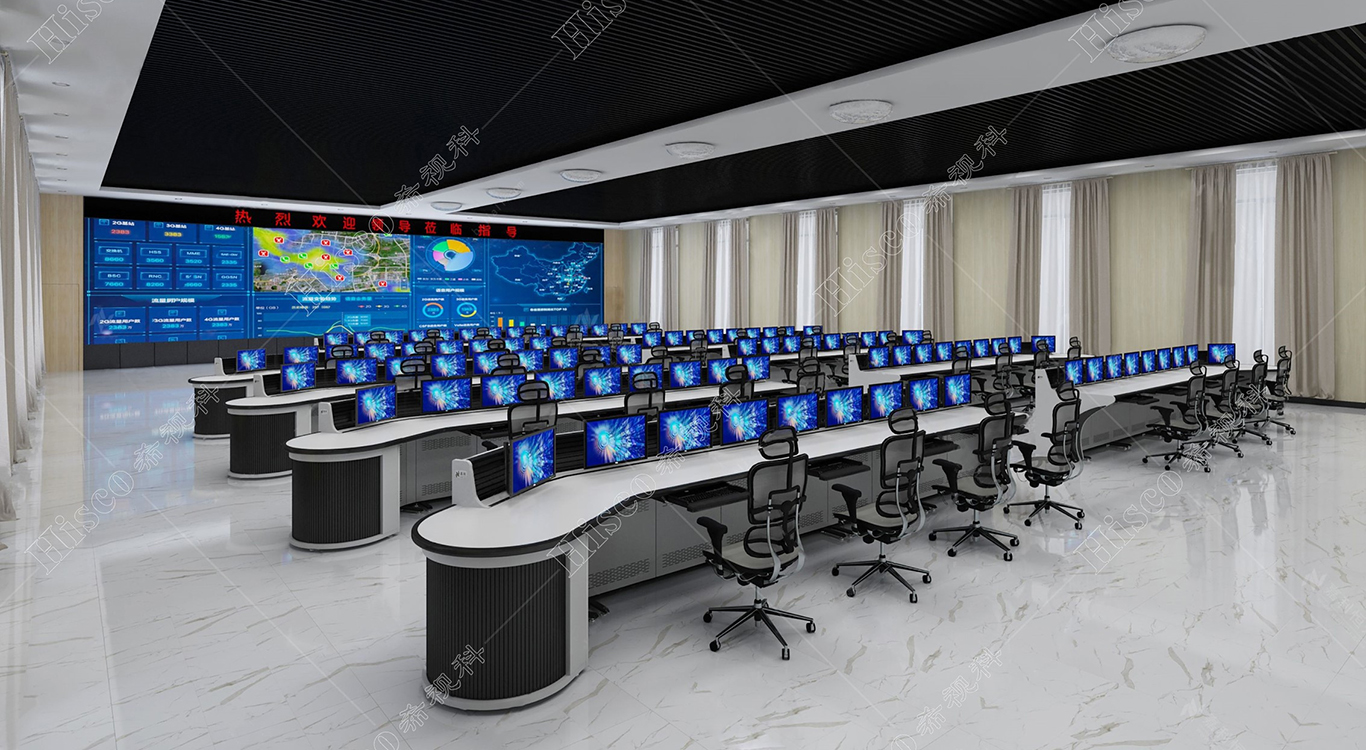
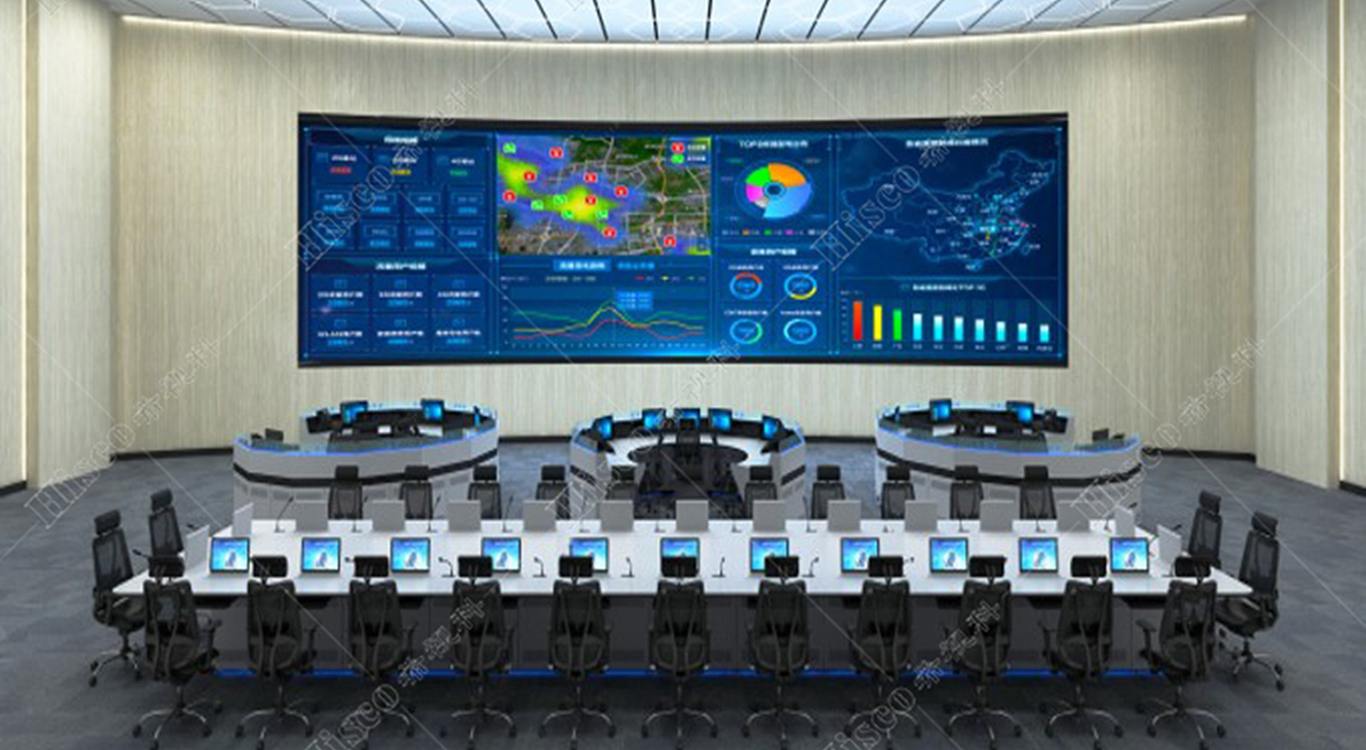
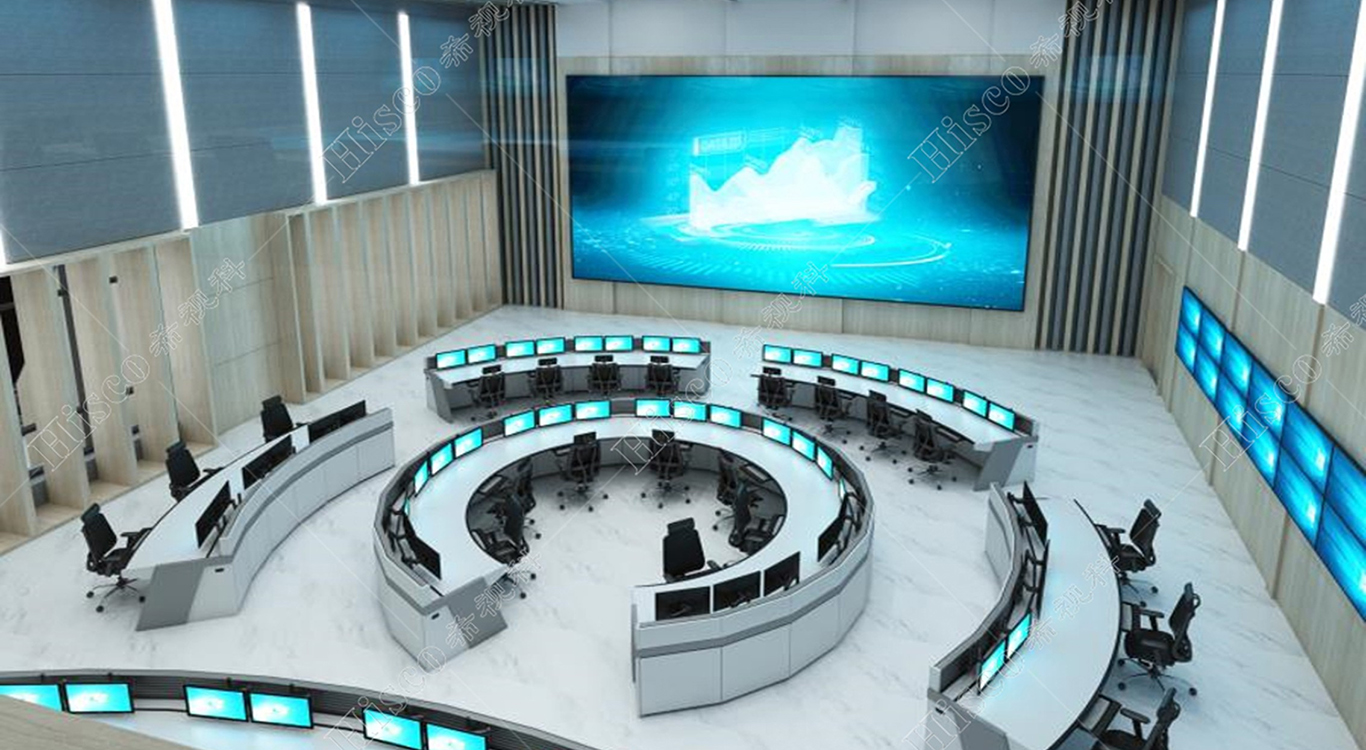
• With the rapid development of the social economy, traditional monitoring and command centers can hardly meet the requirements for efficient, intelligent, and humanized operations. The rapid advancement of technology has brought brand-new solutions for command centers. By adopting new technologies for integrated audio and video management and control, the command and dispatch efficiency of command centers has been greatly improved, while delivering a humanized and intelligent user experience. Today's command center can simultaneously support multiple functions, including monitoring and scheduling, emergency command, achievement display, daily meetings, and technical seminars..
II. Design Objectives
• By adopting cutting-edge industry technologies, we will build a peacetime-wartime integrated command center featuring "clear visibility, efficient scheduling, and full coverage", which can also meet the needs of daily work meetings, achievement presentations, and academic exchanges.
1. Clear Visibility
It supports lossless transmission of ultra-high-definition videos and images with flawless picture quality, and meets the display requirements for high-definition content such as integrated one-map display, ultra-high resolution visualization, and ultra-high-definition monitoring.
2. Fast Scheduling
It breaks down information silos and solves coordination difficulties between different departments and personnel during command and dispatch. It ensures rapid command and deployment of corresponding departments and personnel in real emergencies, with zero delay in audio and video switching and scheduling.
3. All-round Coverage
It enables full-dimensional audio and video interaction between on-site and off-site personnel.
III. System Topology Diagram
IV. Design Scheme
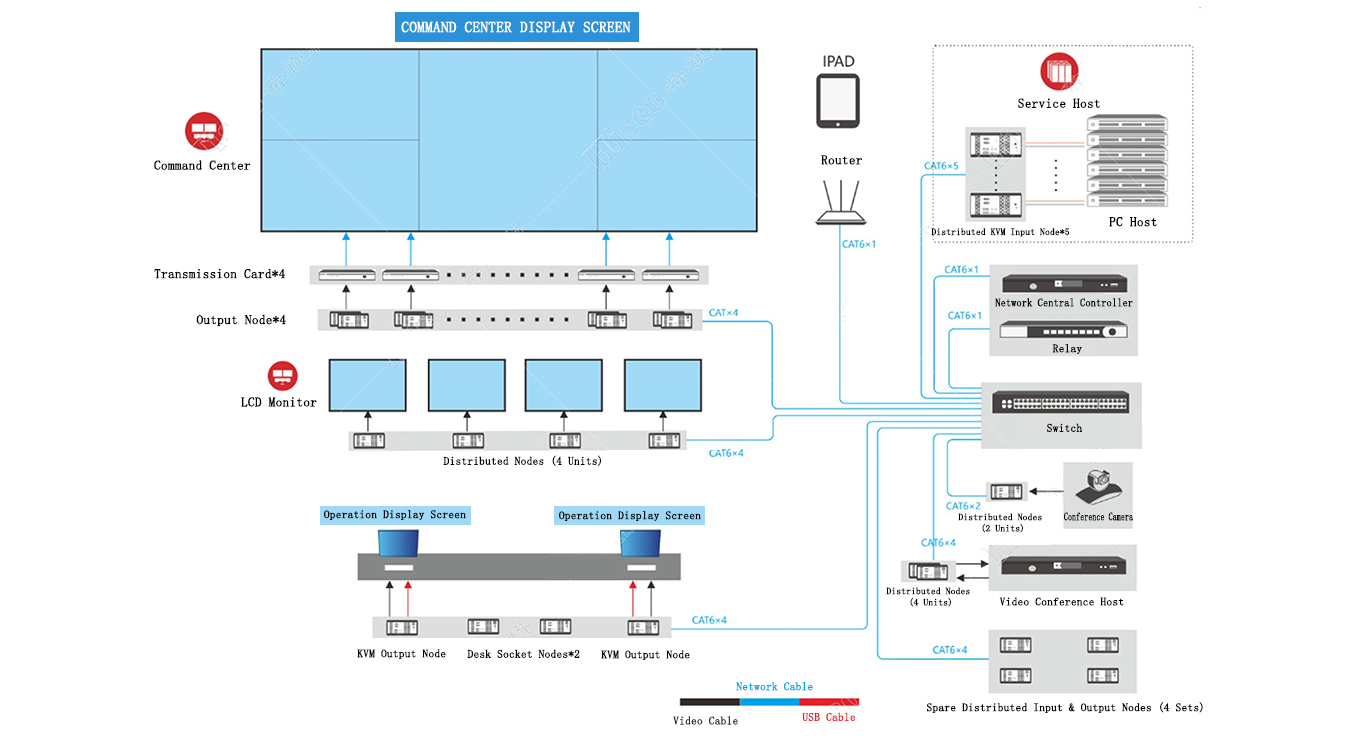
1. Distributed nodes are connected to the main host of the distributed central control system via switches. All types of signals are controlled through the general control terminal, and the distributed control system enables one-click startup and shutdown of multi-mode equipment in the command operation center.
2. The large-screen display system is linked to the distributed nodes of the distributed visual management and control system, supporting display modes including high-definition image presentation on the large screen, image windowing and overlay, cross-screen splicing, and screen roaming.
3. Video input sources including office PCs, supervisor command terminals, and multimedia socket devices are connected to the distributed visual management and control system through distributed nodes to access various video signals.
4. For the audio system, wall-mounted and ceiling speakers are wired to their respective power amplifiers for audio output. Microphones are installed on conference tables for audio input. Both audio input and output are connected to distributed nodes via an audio matrix to achieve centralized audio control.
5. Power supplies for equipment in the machine room and lighting systems are connected to distributed nodes through power sequencers, power managers, and PLC distribution boxes, enabling the central control system to implement environmental control for the command room.
V. System Functions
1. Low bit rate & high image quality transmission, seamless interconnection across remote regions
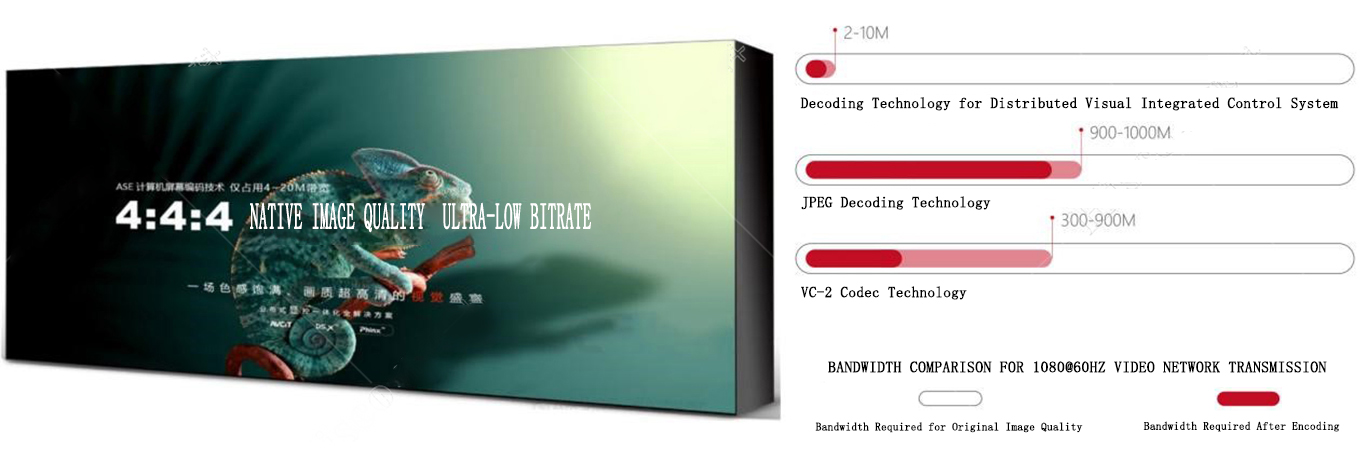
The distributed visual management and control system only requires a bandwidth of 2–10 Mbps to transmit a single 2K (1080P) video with original image quality, while the bandwidth required for an original 4K video does not exceed 20 Mbps. This breaks the bandwidth bottleneck of high-quality signal transmission links. Up to 50 channels of high-quality 4:4:4 signals can be transmitted simultaneously over a single Gigabit network with nanosecond-level synchronization, enabling easy interconnection between multiple sites and remote regions.
2. Large Screen Visual Dispatching Function
- The distributed visual management and control system integrates the functions of a video wall processor and an audio & video matrix switcher. Splicing control can be realized through distributed nodes, including the following mode: Single Full-screen Display: A complete video image can be displayed across the entire video wall, supporting direct full-screen release and display of high-definition data from business workstations.
3. Visualized Signal Management & Scheduling with Accurate and Orderly Dispatch
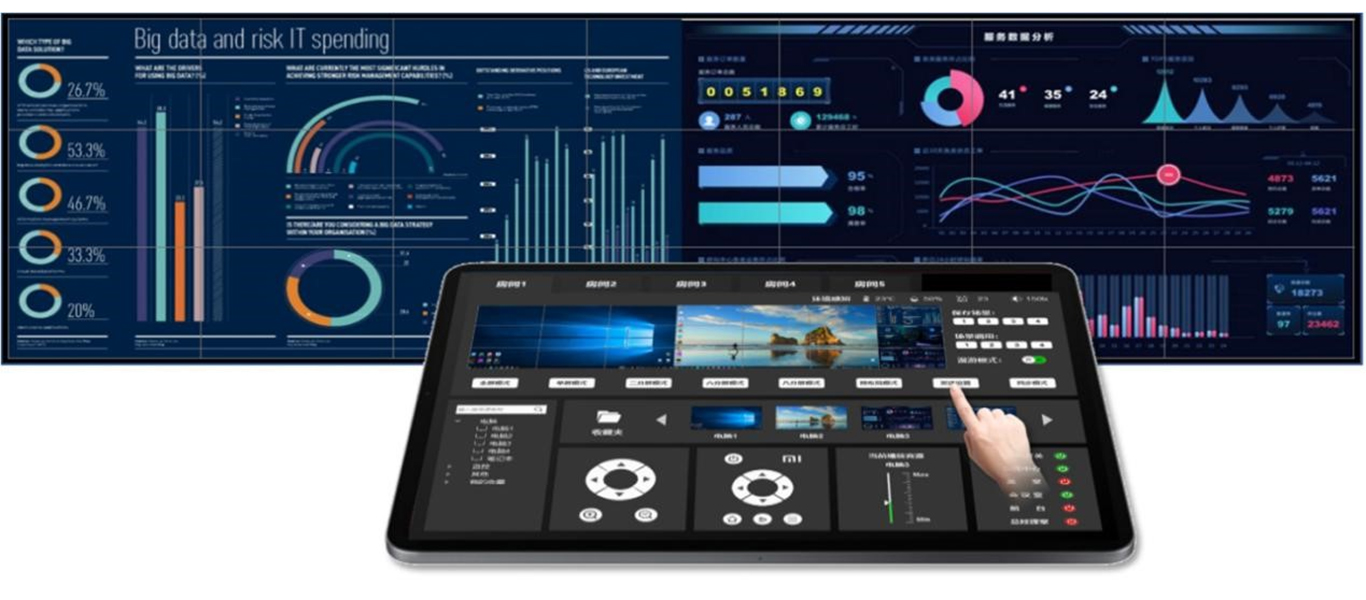
• The distributed visual management and control system supports visualized operation via handheld tablets or control PCs, including uploading signals to the video wall, closing displayed windows on the large screen, as well as configuring, saving and recalling various display presets for the video wall. It enables unified management and preview of all signal sources, and supports customized operation interfaces for controlling devices such as cameras. Each distributed node is equipped with one audio input channel and one audio output channel, and supports volume adjustment. Users can manually drag the volume slider to adjust the output volume.
4. Interconnection, Release, and Sharing of Cross-Regional Large-Screen Content
• As a core carrier for information display, the video wall supports instant signal presentation to deliver video support for emergency missions. Multi-level command centers often conduct joint dispatch for major incidents, which makes cross-site screen data interconnection and information sharing extremely critical.
5. Real-Time Visual On-Screen Annotation and Synchronous Command Issuance
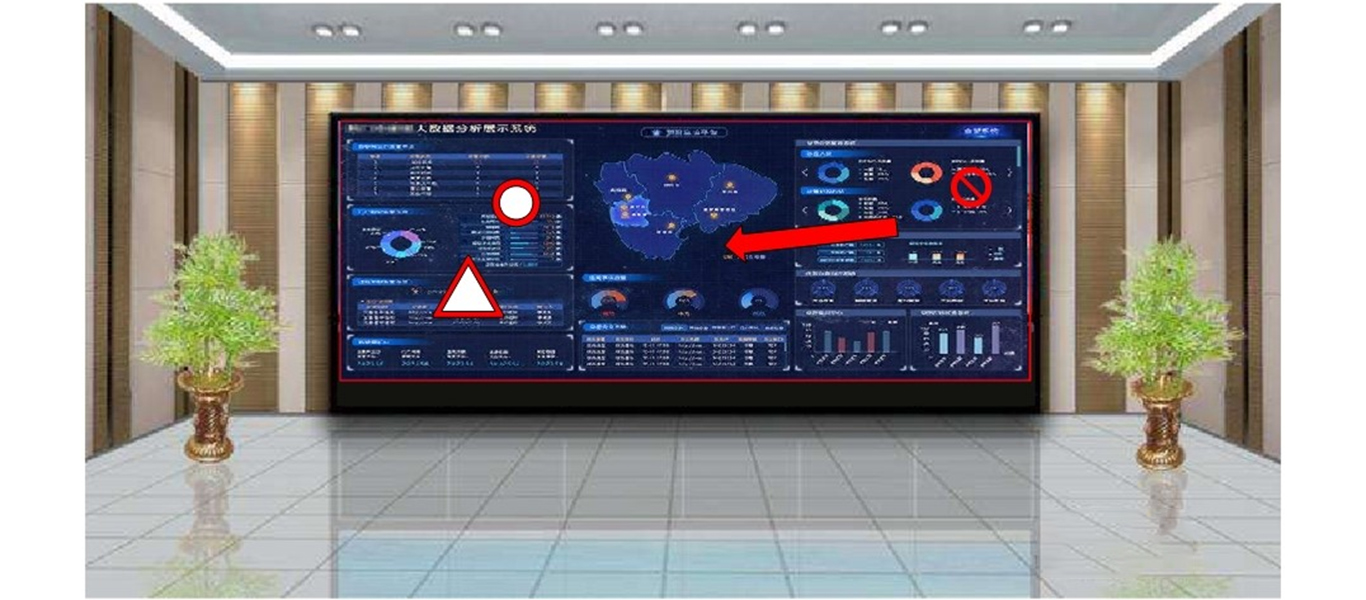
• To improve command and decision-making efficiency and meet commanders’ requirements for rapid interaction with on-screen content, the distributed visual management and control system supports real-time large-screen annotation. It can quickly mark spatial coordinates and key points of concern to highlight core information. Operators can add annotations to on-screen content via control terminals in multiple forms, including but not limited to lines, shapes, legends, and icons. The color, size, and line thickness of all annotations can be adjusted freely, so that key information can be clearly marked over the underlying display content. This enables fast, intuitive transmission and distribution of command instructions.
6.On-Screen Banner Display Function for Real-Time Conference Information Release
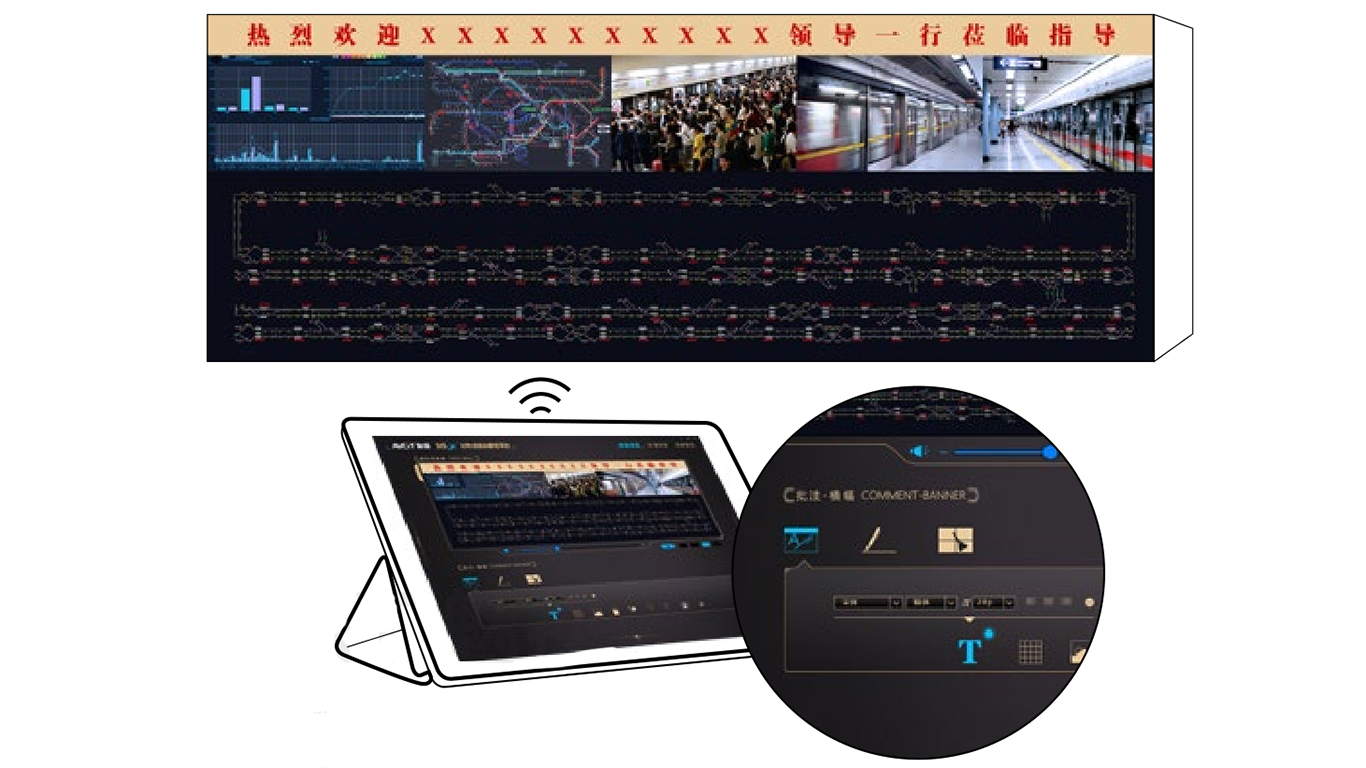
• To meet the demand for displaying slogans and welcome messages during visits by superior leaders and study exchanges by external personnel, the distributed visual management and control system is equipped with a banner display function. It supports virtual partitioning of banner display strips on any side around the video wall in the command center or other rooms.
Banner content can be presented in fixed text, scrolling text, images and other formats. The font, font size, color and other parameters of text can be customized as required. No additional LED strip screens or dedicated control PCs are required.
7. Centralized Equipment Control & One-click Intelligent Scene Switching
• The central control system refers to a solution that delivers unified control over audio, lighting, power and other facilities. Widely deployed in multimedia classrooms, multi-function conference halls, command & control centers and smart homes, it allows operators to manage LED video walls, projectors, document cameras, DVD players, video recorders, tape decks, power amplifiers, microphones, desktop computers, laptops, motorized projection screens, electric curtains, lighting and other devices via button control panels, PC monitors, touch screens or wireless remote controllers with dedicated central control software. It creates a modern multimedia audio-visual conference environment featuring high-definition visuals, high-fidelity sound and a fully controllable audio-lighting atmosphere. The system is ideal for multi-function halls of government authorities, schools and enterprises to host multimedia teaching, training courses, special lectures, thematic meetings, seminars and product demonstrations.
• A centralized central control system is an indispensable component of modern smart conference facilities. It has become standard mandatory equipment, especially for multi-function meeting rooms, command centers and dispatch centers with complex signal sources, multiple display terminals and an integrated multi-system architecture.
• While handling audio and video management, the distributed visual management and control system can also realize equipment control. Each node device of the system is equipped with multiple control interfaces including RS232, RS485, I/O and IR. Control commands are transmitted to these interfaces through control modules to fulfill central control functions. Meanwhile, power management modules receive instructions from control modules to control high-power devices such as lighting and motorized curtains.
8. Lighting Environment Control
• Via wall-mounted central control panels, the distributed visual management and control system supports grouped lighting switching (on, off, full-on, full-off) and combined scene mode control. Corresponding environmental modes can be automatically triggered along with equipment power-on and power-off actions.
9. KVM Desk Collaboration with Human-machine Separation
• The distributed KVM desk collaboration management system enables separated deployment of operator workstations and business host computers. All host devices can be centrally placed in the equipment room for unified administration to achieve human-machine separation, which effectively saves interior space in the command center.
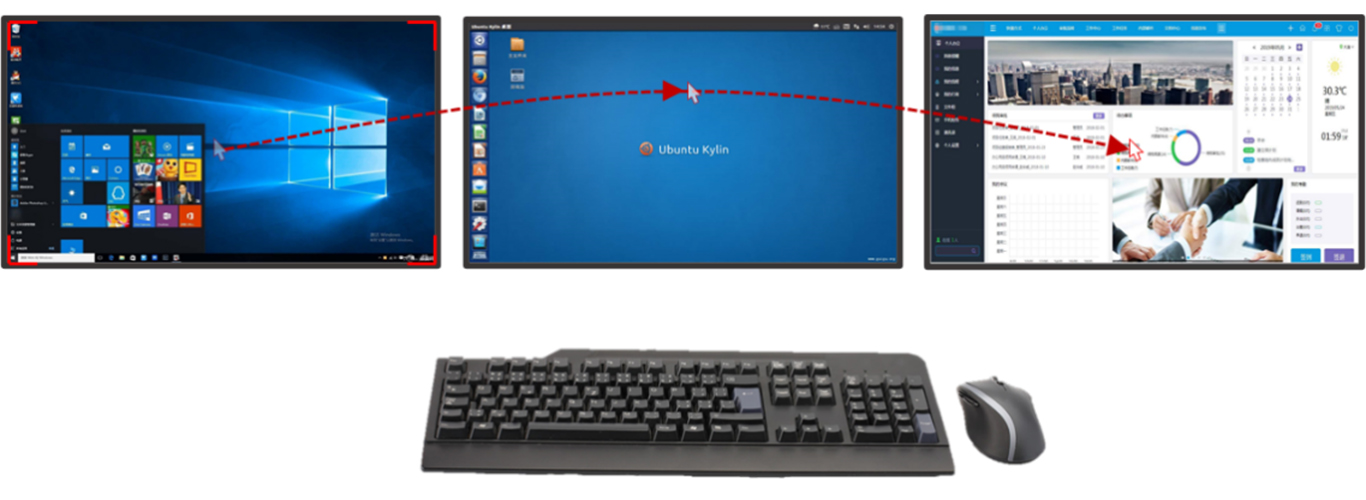
10. Cross-screen Mouse & Keyboard Operation
• Each workstation is equipped with multiple monitors. To streamline operations, the distributed system supports controlling multiple hosts with one set of mouse and keyboard: Operators can group all connected displays via distributed software and configure matching layouts according to the multi-row and multi-column arrangement of workstation monitors. Once configured, a single set of mouse and keyboard can manage all local screens and realize cross-screen roaming of the cursor and input devices. Each workstation supports arbitrary combined cross-screen roaming operations for monitors arranged in any rows × columns layout, facilitating operation scenarios with multi-screen display requirements.