Integrated Paperless Conference System Solution
I. Industry Background
• Paperless conference systems emerged around 2010, initially driven by the fundamental demands of environmental protection and reducing paper waste. These systems have transformed conventional paper-based meetings into smart conferences that rely on tablet PCs as information carriers, fundamentally reducing paper consumption. They not only save paper resources, but also improve information confidentiality and increase conference efficiency.
• As an innovative conference model, paperless conferences virtualize and intellectualize all segments of traditional meetings, integrate multimedia and multi-terminal carriers into conference scenarios, and greatly enhance the interactive experience during meetings. With technological advancement and the growing informatization investment from government authorities, this eco-friendly, energy-saving and confidential conference model has achieved remarkably rapid development.
II. Requirements Analysis
- In daily governmental administration, meetings are a core component of work for government agencies at all levels in China, particularly for the "four leading bodies" (the Party Committee, the People's Congress, the Government, and the Political Consultative Conference). Meetings including representative congresses, leadership transition meetings, standing committee meetings, training sessions, and year-end wrap-up meetings are held so frequently that the situation has been described as a "mountain of documents and a sea of meetings."
At present, across the numerous meetings organized at all levels, meeting materials and documents are typically distributed to every attendee, with each participant receiving an individual copy. This requires photocopying large volumes of meeting materials, which consumes a substantial amount of paper. Meanwhile, to disseminate the guiding spirit of the meeting, attendees often further photocopy meeting materials and documents from higher-level departments to distribute to lower-level units. This process repeats itself, meaning even a single meeting often requires printing large volumes of materials and documents for distribution to subordinate departments, consuming significant material and human resources.
In summary, current paper consumption for meeting documents has the following characteristics:
1. Large total paper consumption
2. Severe paper waste
3. Challenges in document recovery and recycling
4. Potential security and confidentiality risks
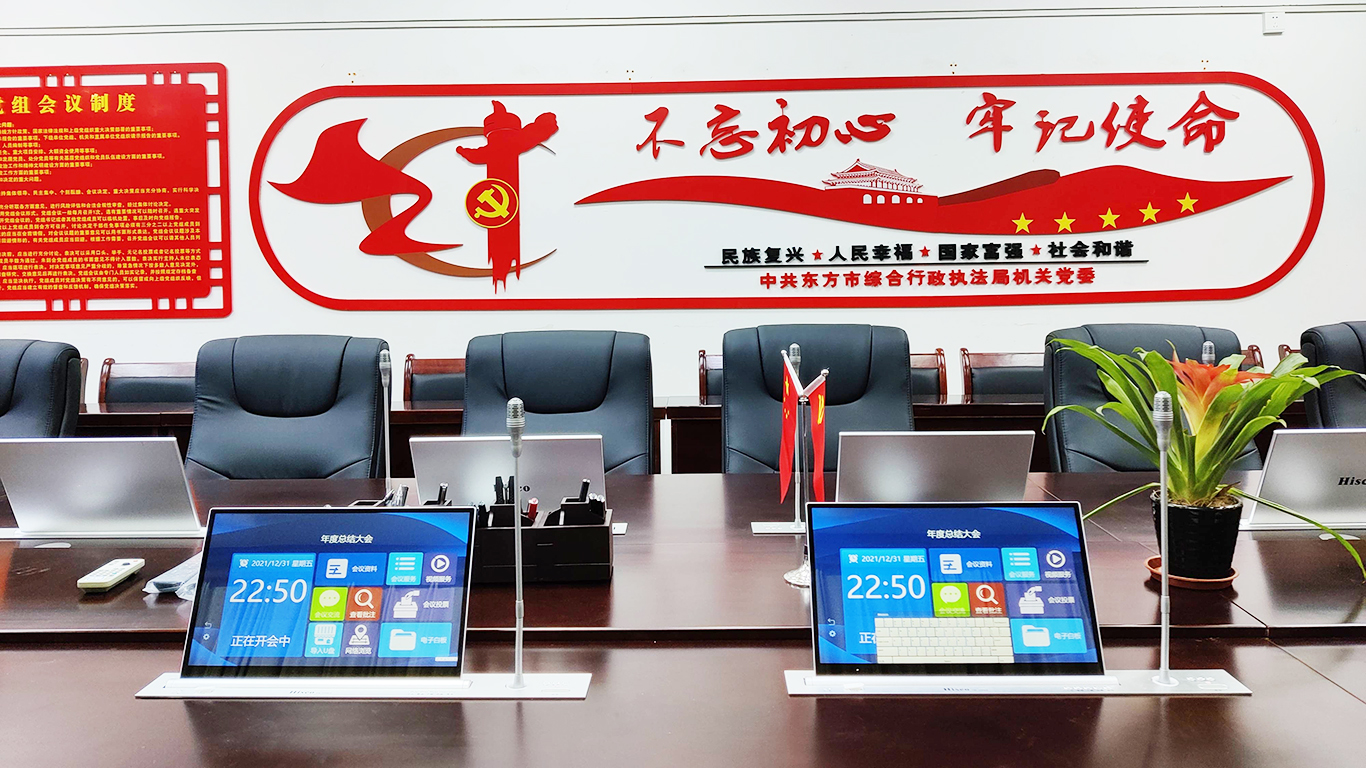
- These are problems that emerged in the process of progress and development, and we must take them seriously and adopt effective measures to address them properly. The launch of the Wangdong Paperless Meeting System has effectively solved the problems encountered in traditional paper-based meetings.
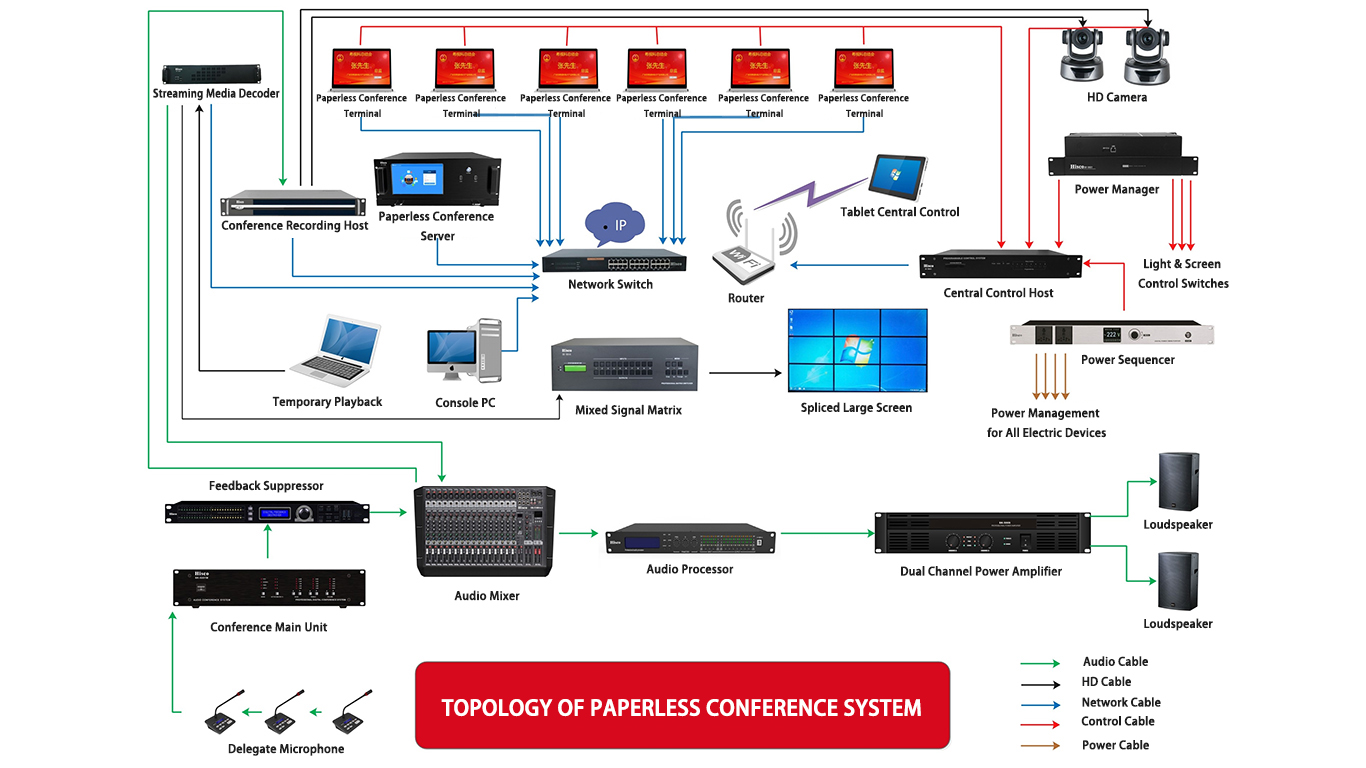
III. System Topology Diagram
IV. System Functions
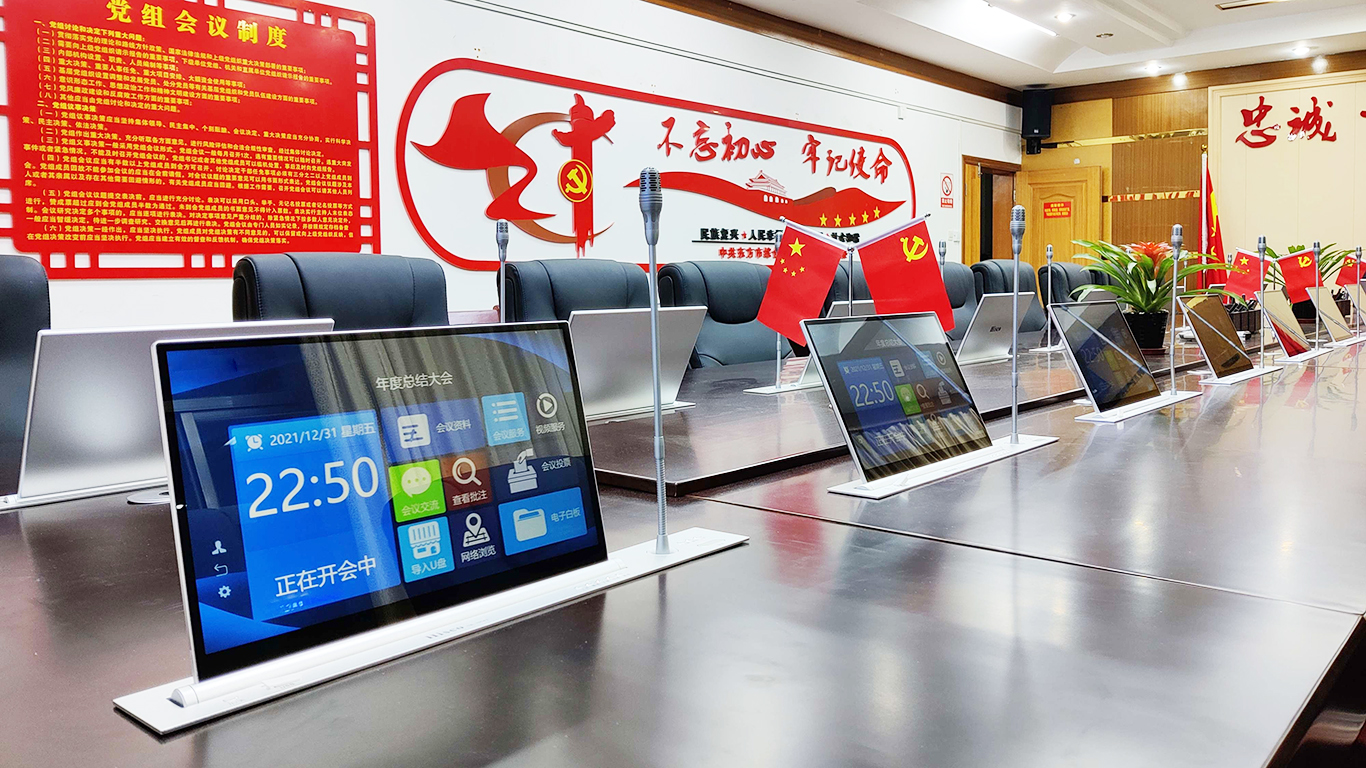
1. Main Paperless Conference Interface
2. Electronic Nameplate
Function Description: Displays participants' names to guide them to their designated seats.
3. Conference Check-in
Function Description: Supports handwritten signature check-in for all attendees. The system automatically records and counts attendance status, and enables export of participants’ signatures.
4. Document Distribution
Function Description: Participants can view and discuss categorized conference document lists. The system supports document uploading, distribution and revision, and automatically generates countersignature files. Personal presentation materials prepared by participants before the meeting can be imported locally via USB flash drives without advance submission, and shared during speeches.
5. Participant & Attendance Statistics
Function Description: Click *Participants* on the right side to view all attendees of the current meeting. Attendees with a red microphone icon marked before their seat number are the current host. The host role can be switched on this page by clicking any attendee’s name. If pre-configured, the network camera will automatically rotate to face the new speaker after the role switch.
6. External Display
Function Description: After the speaker initiates one-click external display, conference content can be synchronized and shared in real time to projectors or other external display devices. This feature supports simultaneous output across multiple display screens, as well as interactive paperless conference functions on video walls.