Integrated Auditorium & Lecture Hall System Solution
I.Industry Background
1. The Central Authorities issued the *National Informatization Development Strategy (2006–2020)*, which called for vigorous advancement of informatization. As the most critical information providers and users in society, government institutions have naturally taken a leading role in informatization construction.
2. National ministries of public security, procuratorates and courts have put forward clear requirements for informatization development. Construction must comply with the overall design plans of the Golden Shield Project, Golden Court Project and Golden Procuratorate Project, and evolve toward IP-based converged networks that integrate data, voice and video services.
3. The informatization construction of government institutions is primarily built on the development of computer network systems, communication systems and audio-video systems. Its core goal is to deliver various public service initiatives and wholeheartedly serve the people.
4. New-generation information technologies including Internet Plus, big data, cloud computing and the Internet of Things underpin the intelligent and informatized office transformation of government departments and agencies.
II. Demand Analysis
• Guided by the principle of "demand-driven, cutting-edge-oriented, feasible implementation and sustainable development", the meeting room construction project aims to build an integrated venue supporting daily meetings, video conferences and multi-functional events, featuring advanced design concepts, stable system operation, comprehensive functions and efficient command scheduling.
1.The system shall support convenient and efficient management of all video and audio subsystems.
2. DLP high-definition engineering projectors or LCD televisions shall be adopted to improve projection and display performance. These devices deliver a high contrast ratio, superior image clarity, uniform picture quality, vivid colors, long service life and stable image quality.
3. The sound reinforcement system shall be easy to operate with flexible functions to meet diverse conference requirements.
4. A centralized control system shall be deployed to realize fast and convenient overall system management.
5. The system shall support the holding of video conferences, routine meetings and multi-functional activities.
6. The system shall meet the requirements for high-definition signal transmission, access and display of signals from video terminals.
7. The system shall satisfy the needs of discussion and speech delivery within the meeting room.
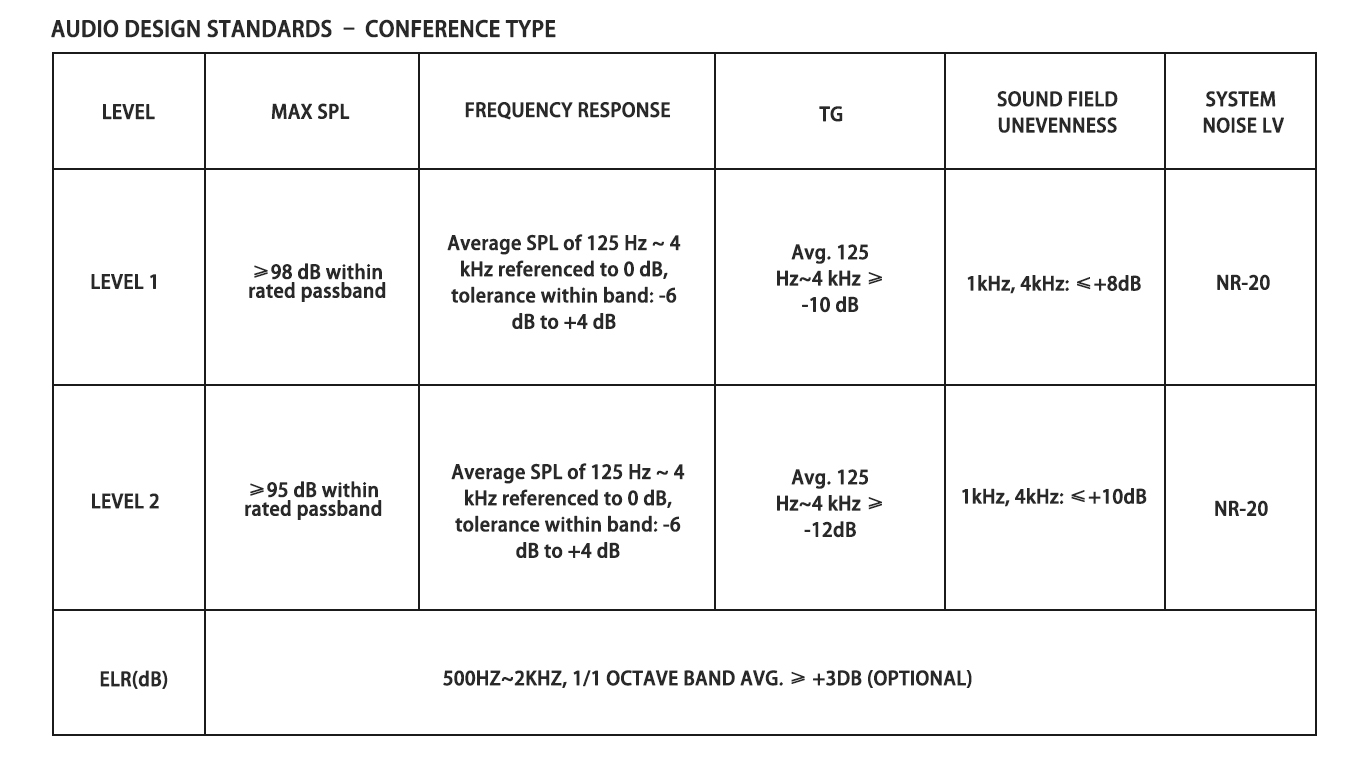
III. Design Standards
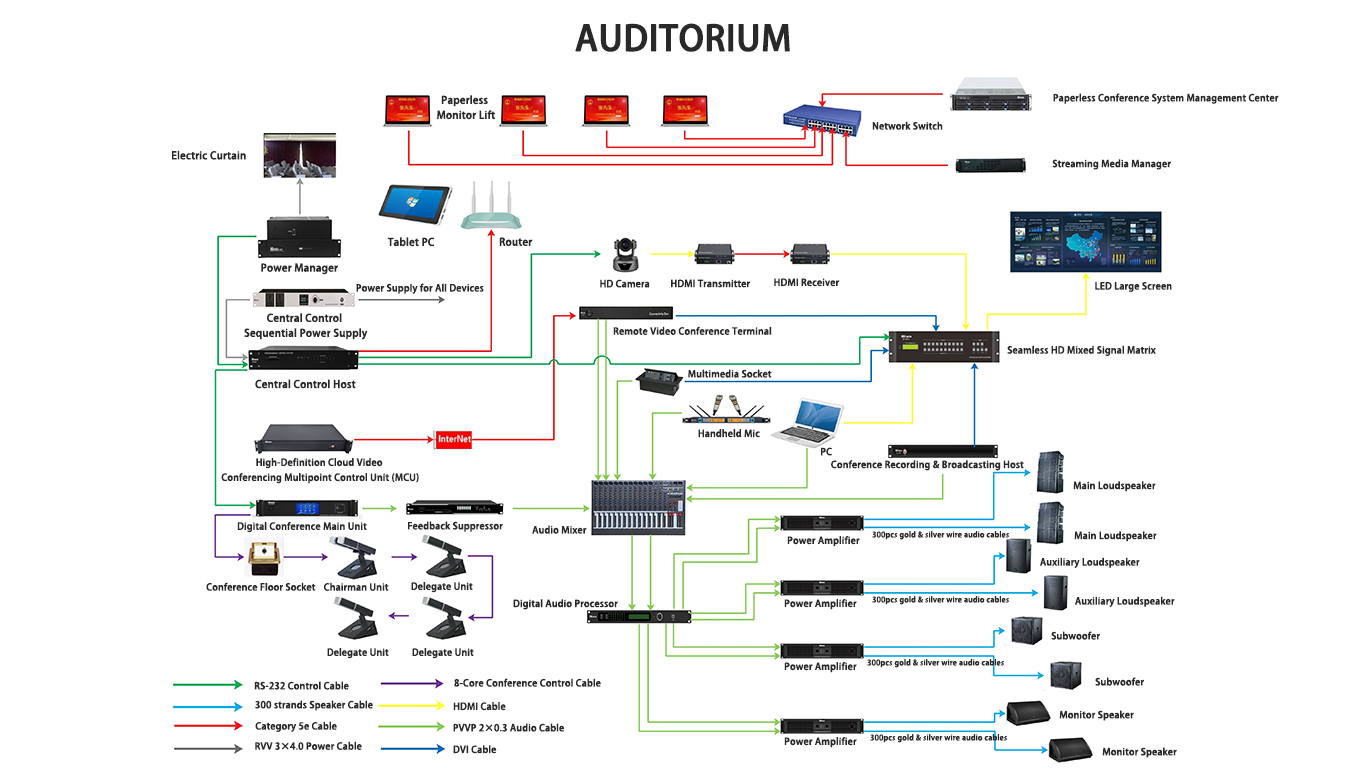
IV. System Topology Diagram
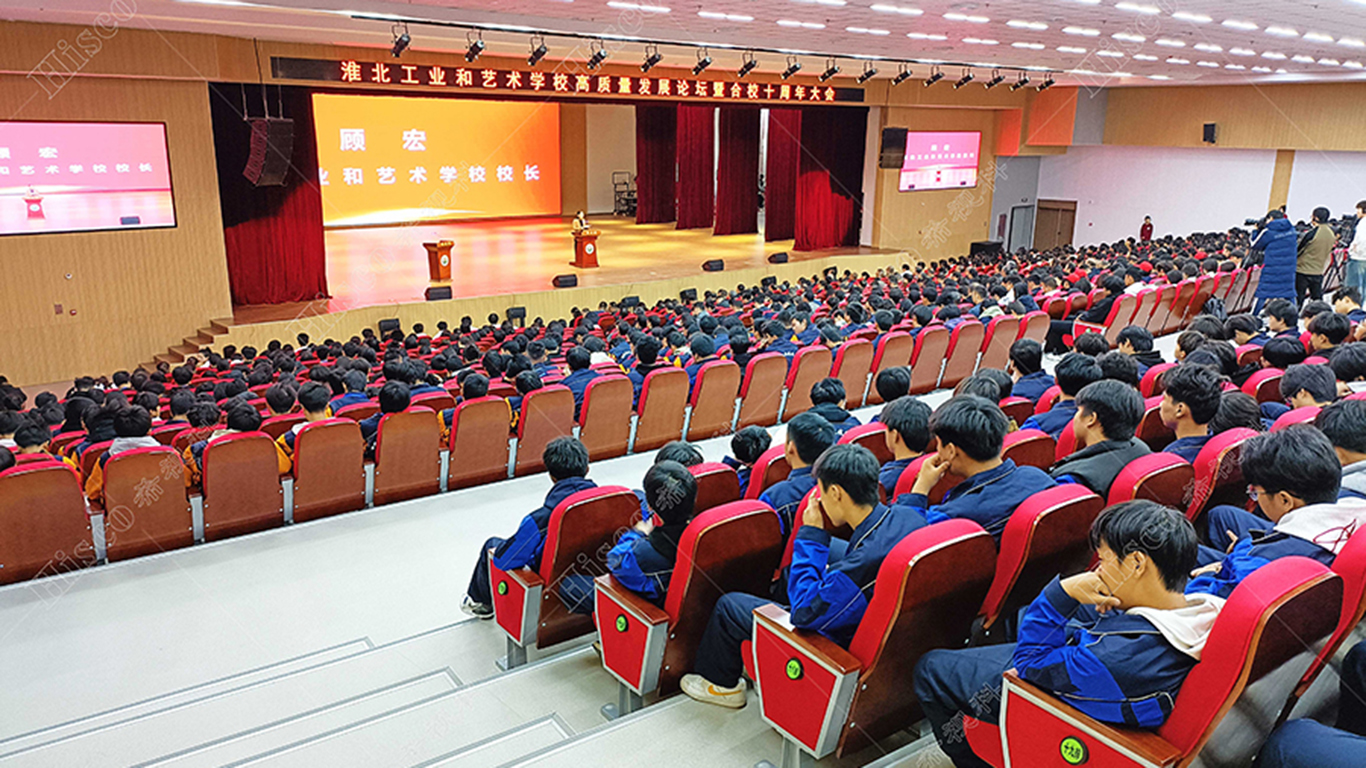
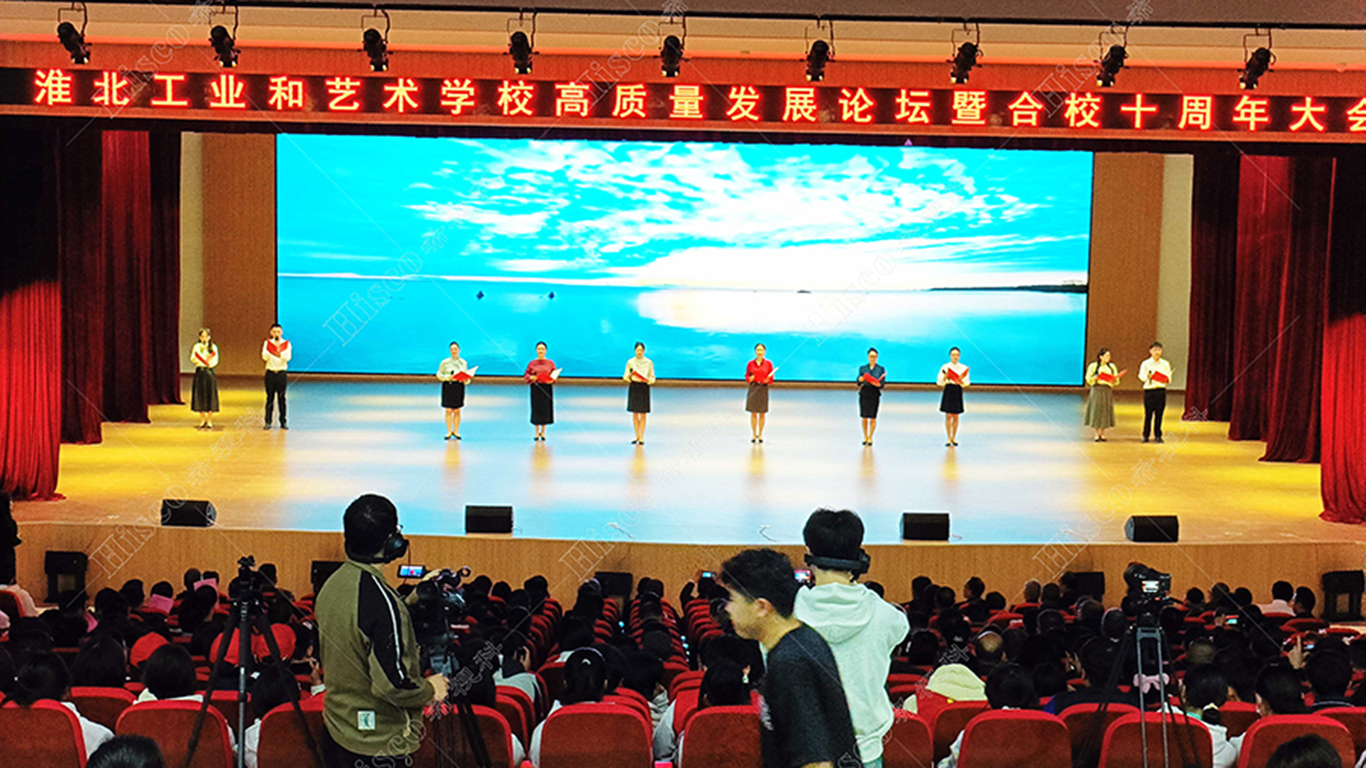
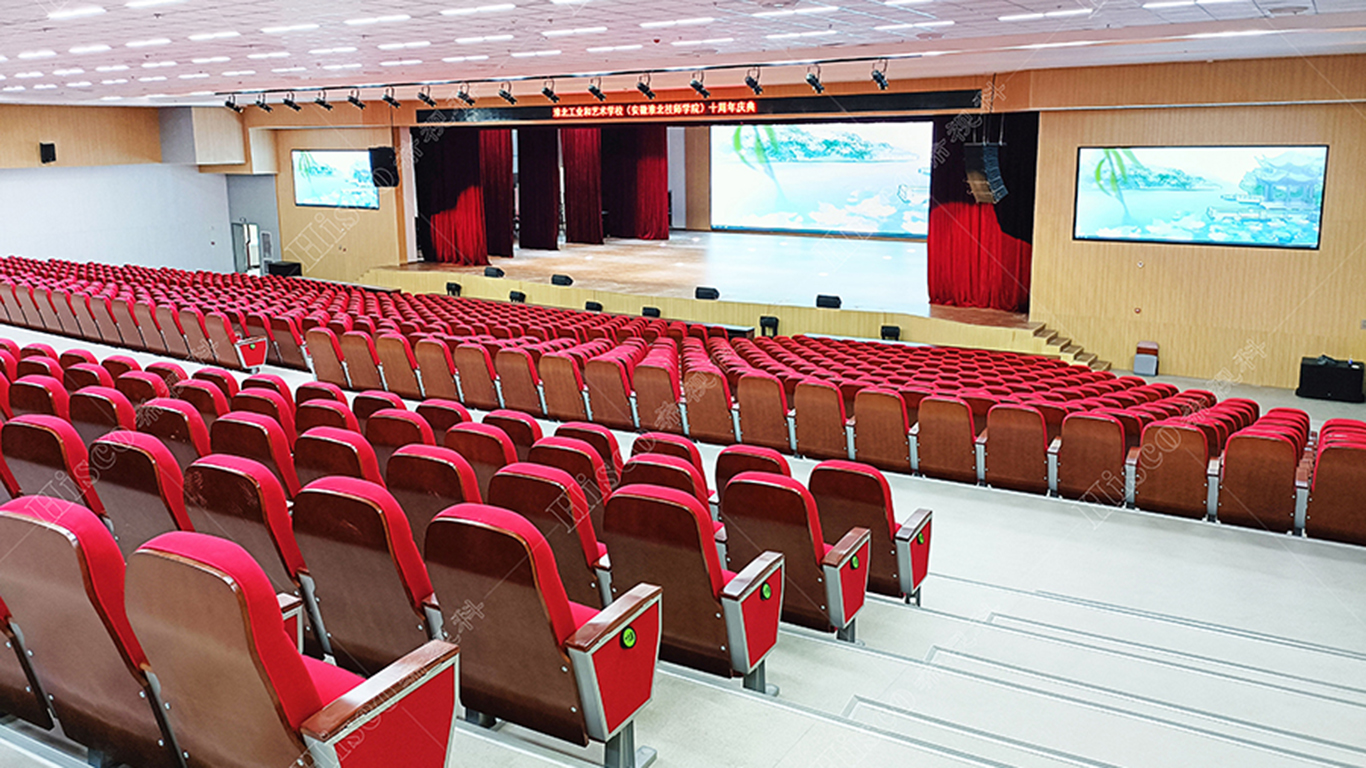
V. Actual Performance Effects
1. Sufficient On-site Sound Pressure Level
With the advancement of modern recording technology and the improvement of the public’s auditory appreciation standards, audio systems require sufficient dynamic headroom to reproduce high-dynamic-range audio signals without distortion. The selected loudspeakers feature high power handling and high sensitivity, and are matched with power amplifiers that have sufficient power margin. Calculations verify that the sound pressure level in the completed meeting room can fully meet the indicators for Class I auditoriums specified by national standards.
2. Excellent Sound Field Uniformity
In the design, loudspeakers are arranged into point-source arrays based on the precise dimensions and area of the audience area, which effectively reduces the comb filtering effect of the speaker array. All selected loudspeakers are constant-directivity models that improve speech intelligibility. The entire audience area falls within the coverage range of the loudspeakers, ensuring uniform sound field distribution, a result that has also been validated by computer simulation calculations.
3. Smooth Transmission Frequency Response
Parametric equalization tuning is performed for each speaker channel, ensuring minimal variation in acoustic beam width across all frequencies within the directivity control range, with no sharp peaks or dips. In addition, each speaker channel is connected to a room equalizer (integrated in the digital audio & video processing system), which provides sufficient adjustment tools to compensate for the impact of the coupled acoustic space between the auditorium and the screen area on the frequency response. This guarantees an overall smooth transmission frequency characteristic for the sound reinforcement system.
4. Favorable Speech Transmission Index
Loudspeakers are reasonably arranged, so that the entire audience area is fully covered by the main sound reinforcement speakers. The constant-directivity horns adopted by the speakers allow rapid attenuation of sound energy beyond the -6dB coverage angle, which reliably ensures the system achieves the designed target for speech transmission gain.
5. Strong System Adaptability & Convenient Expansion
Based on equipment system analysis, the design prioritizes the measurable acoustic indicators listed above, while also taking practical application requirements into account to improve system compatibility. In addition to conference sound reinforcement, the system also supports multimedia music playback, with an effective reproduction frequency range of 35Hz–18kHz. All equipment in the system reserves ample capacity for subsequent expansion.